ApplyBoost 2.0
Simplifying the application and recruitment process at the same time
ApplyBoost is a platform that helps students and Recruitment Partners navigate the application and recruitment process more smoothly. By adding new features and improving existing ones, it stays efficient, scalable, and user-friendly. Thoughtful updates ensure ApplyBoost keeps evolving to meet user needs while maintaining a great experience.

TEAM MEMBERS
Harry Kim: UX/Visual Designer
Subin jacob: UX/Visual Designer
TIMELINE
2 months
TOOLS
Figma, Atlassian Jira/Confluence, Storybook, Chromatic
TOOLS & METHODS
User Empathy, Wire framing, Prototyping, Heuristics, Scalability, Brand Alignment, Accessibility.
CLIENT
Internal (ApplyBoard Inc.)

I was responsible for design strategy, experience definition, and UI design across key student- and RP-facing flows.
My Role & Collaboration
My responsibilities included:
Worked with product teams to define user experience goals and success metrics
Turned research insights into user flows, information architecture, and interaction designs
Designed high-quality UI aligned with the Crystal Design System
Collaborated with product managers, engineers, and cross-functional teams to stay aligned
Improved designs based on technical feasibility, existing features, and product roadmap constraints
I partnered closely with a dedicated UX Researcher who led user interviews, surveys, and insight synthesis. My role focused on turning those insights into actionable design decisions.
To maximize students' chances of enrolling at their desired schools, ApplyBoard must offer effective tools and guidance. The ApplyBoost Program was created to give students the flexibility to work with an RP or proceed independently. However, ApplyBoost V2.0, launched in India in 2022, revealed key challenges: low RP engagement, limited onboarding, a low conversion rate from registered to paid applicants, and product inefficiencies.
Problem
Problem Statement
"How might we enhance the ApplyBoost program to give students a fair opportunity to either choose an RP or continue their study abroad journey independently?"
This problem statement calls for a renewed approach to the ApplyBoost Program, one that prioritizes both the student and RP experience and addresses the structural challenges that have previously limited its success. By improving ApplyBoost, we aim to offer a robust, student-centered solution that enhances the likelihood of successful enrollment, whether students choose to work with an RP or pursue their journey independently.
To understand the root causes behind low engagement and conversion, a UX Researcher conducted qualitative and quantitative research across students, Recruitment Partners, and internal stakeholders. This included user interviews, surveys, focus groups, and internal workflow reviews.
I collaborated closely throughout synthesis to translate findings into experience opportunities and design direction.
Discovery & Research
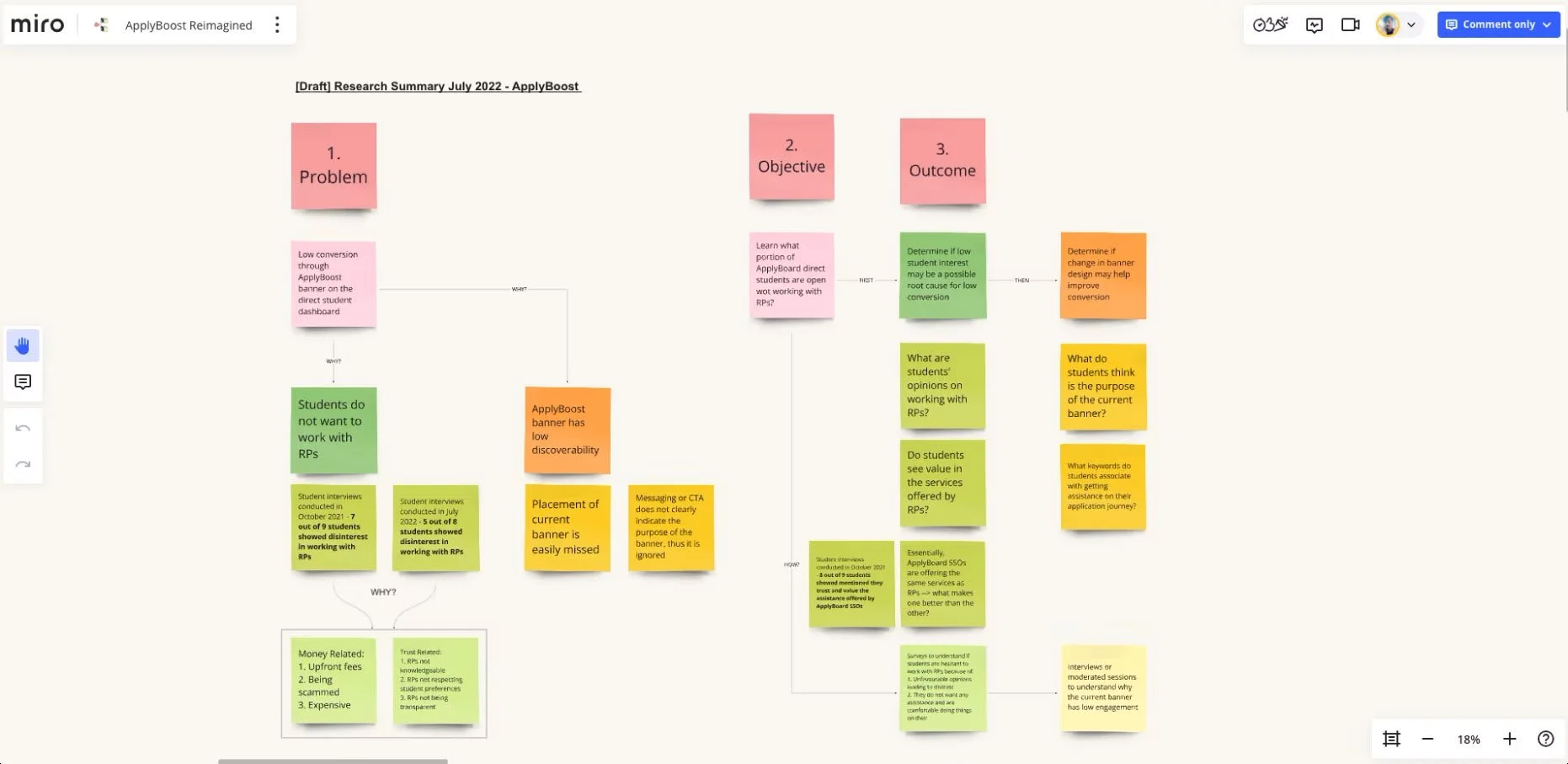
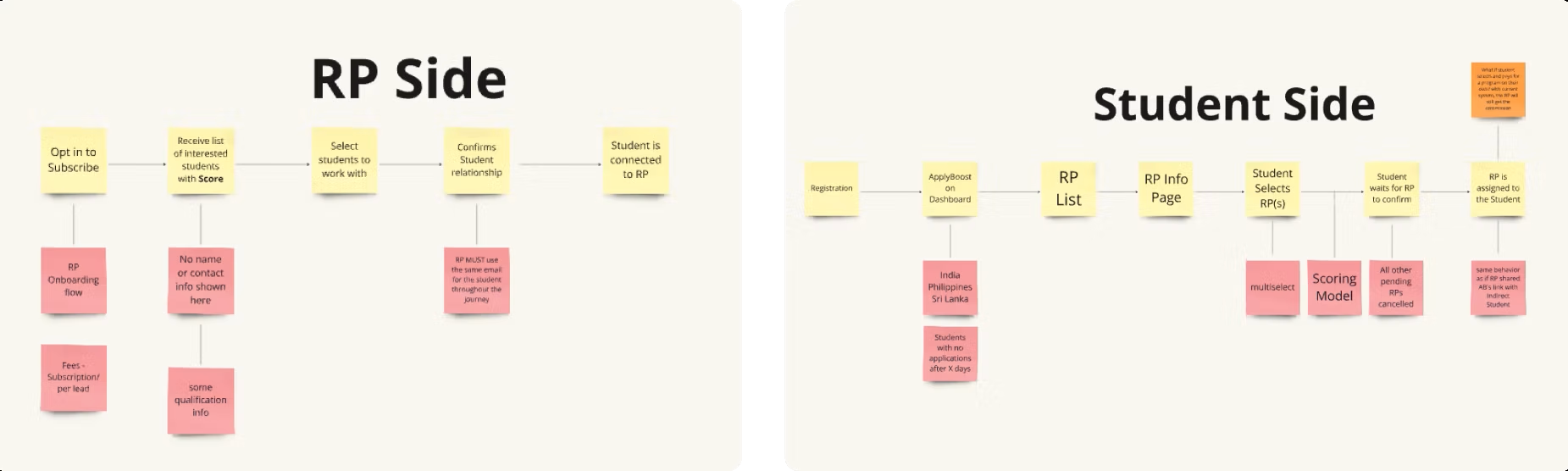
Through user interviews, data analysis, and feedback reviews, we gained a clear understanding of user needs and challenges. This research also confirmed our initial hypothesis regarding the issues ApplyBoost 1.0 aims to address.
Our analysis of ApplyBoost 1.0 has revealed several key issues impacting both program functionality and user engagement:
1. Improving Onboarding Clarity
Students dropped off when sent to partner pages without context, so I designed a guided onboarding experience to clearly explain value and set expectations before selection.
2. Making Profile Completion Clear
Recruiters assumed profiles were complete when key details were missing, so I added progress indicators and “missing information” prompts to improve clarity.
3. Aligning Onboarding Visibility
Stakeholders couldn’t track onboarding progress easily, so I aligned lead and onboarding statuses into a shared, simple system for all teams.
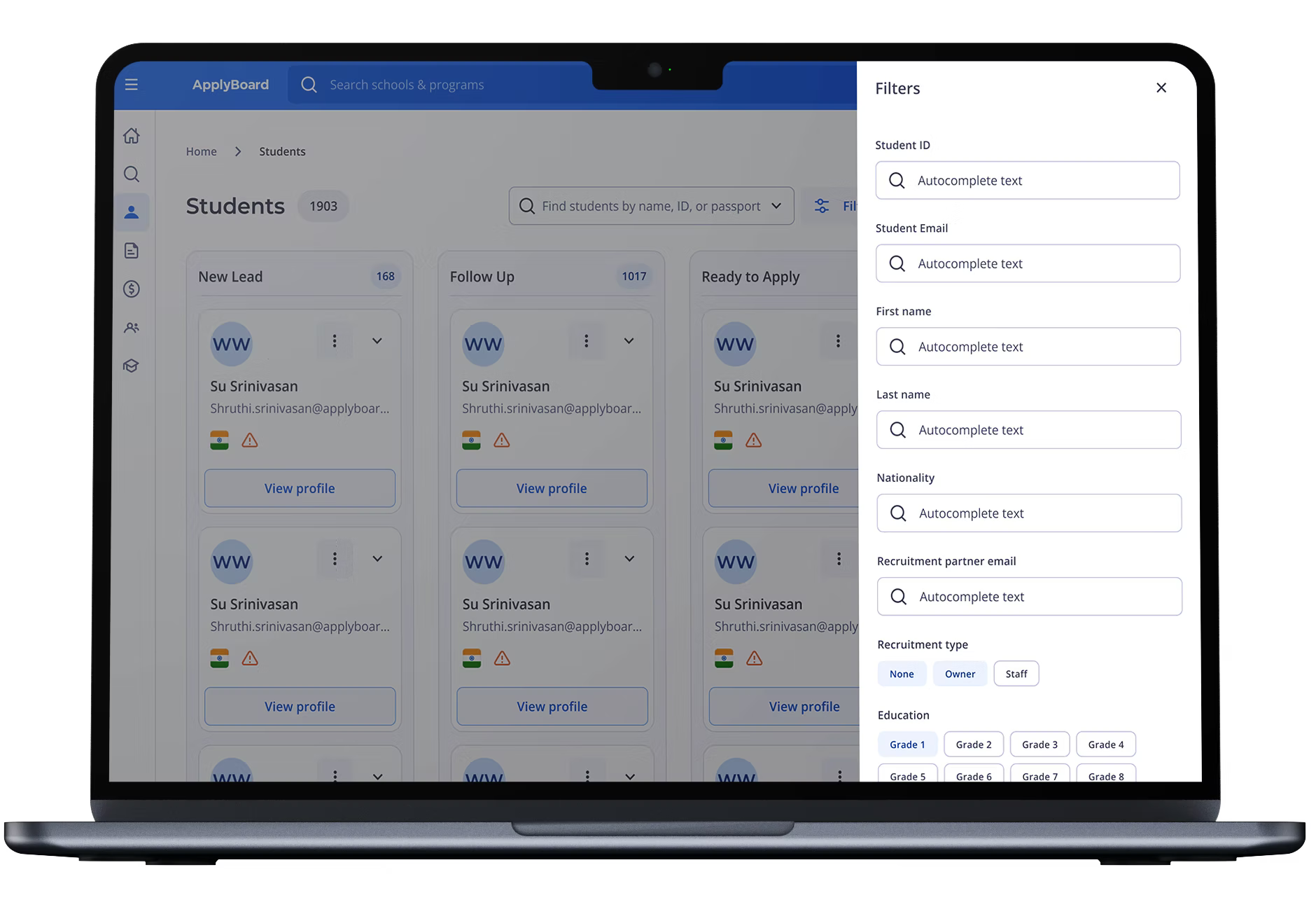
4. Simplifying Lead Management
Declined and archived leads were confusing, so I simplified status definitions and added clear reason-based actions to make them easier to manage.
5. Enabling Better Collaboration
Limited access slowed teamwork, so I explored role-based access to enable better collaboration while maintaining data control.

The ApplyBoost user experience is being re-envisioned from the ground up, guided by thorough user research and a deep understanding of user needs and pain points.
Strategy & Design
Design Approach & Research
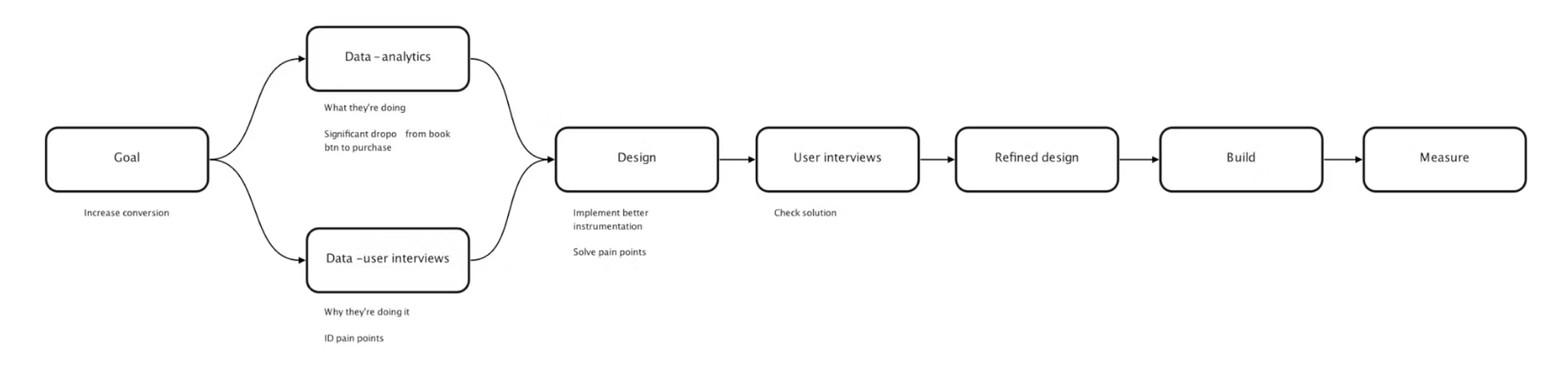
I collaborated with stakeholders through workshops and brainstorming sessions to define user personas and map the ApplyBoost customer journey. Designed solutions to address key pain points, improving both student and recruiter experiences. Simplified processes, improved access, and streamlined communication to align with business goals, increase engagement, and reduce churn.
Focused the redesign on simplicity, transparency, and accessibility—ensuring students receive clear guidance while enabling recruiters and internal teams to collaborate more efficiently.
ApplyBoost 2.0 focused on improving two core experience areas:
Student onboarding and partner selection
Lead management and onboarding visibility for RPs and internal team
Solution
The revamped ApplyBoost UI solution is centered around four key components to optimize user experience, support effective lead nurturing, and strengthen the student-RP matching process. By implementing targeted interfaces and interactive elements, this redesign offers an intuitive and supportive journey for both students and Recruitment Partners (RPs).
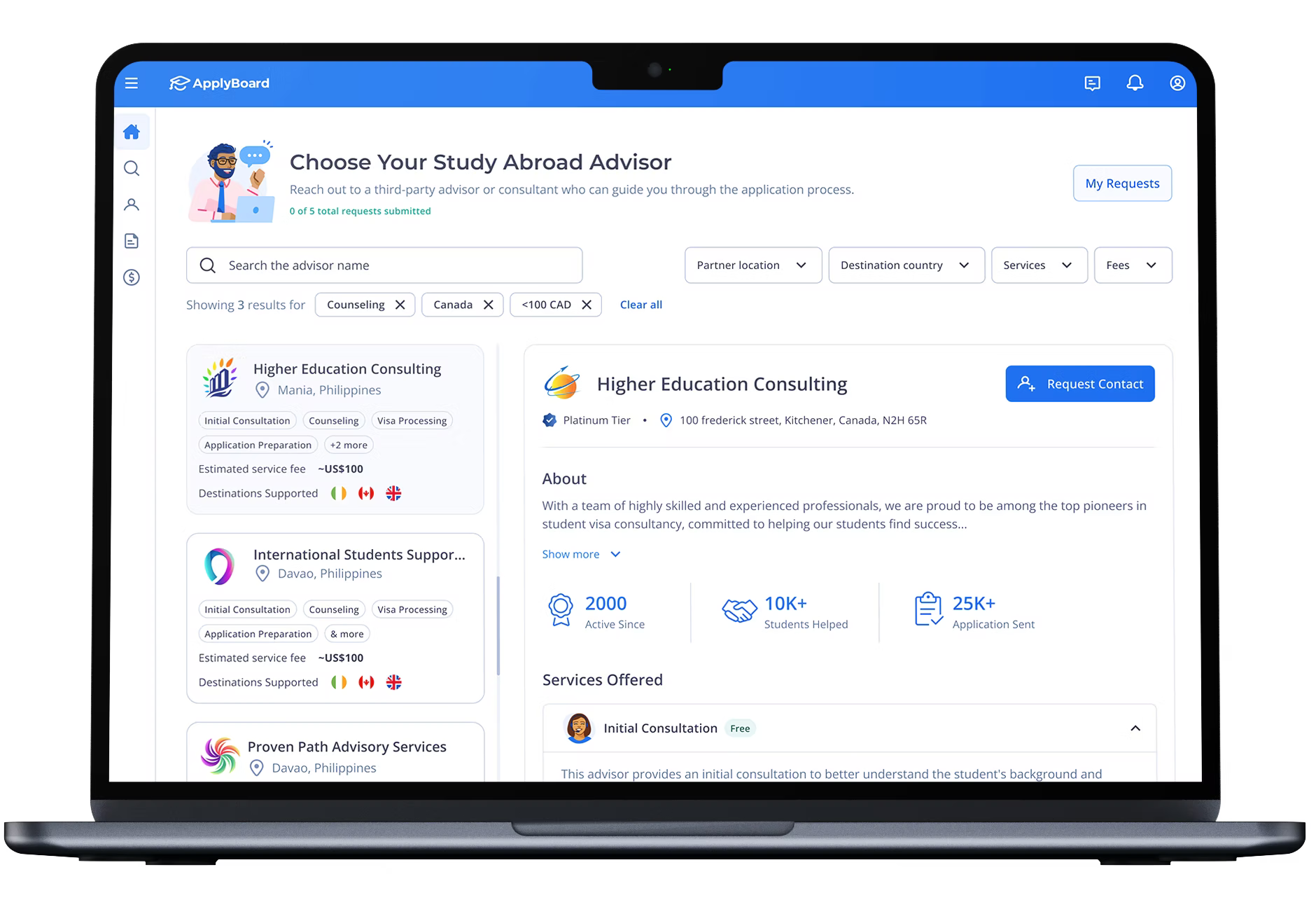
Enhanced Student Onboarding: A streamlined onboarding flow empowers students to choose an RP during or after signup, offering a more personalized journey.
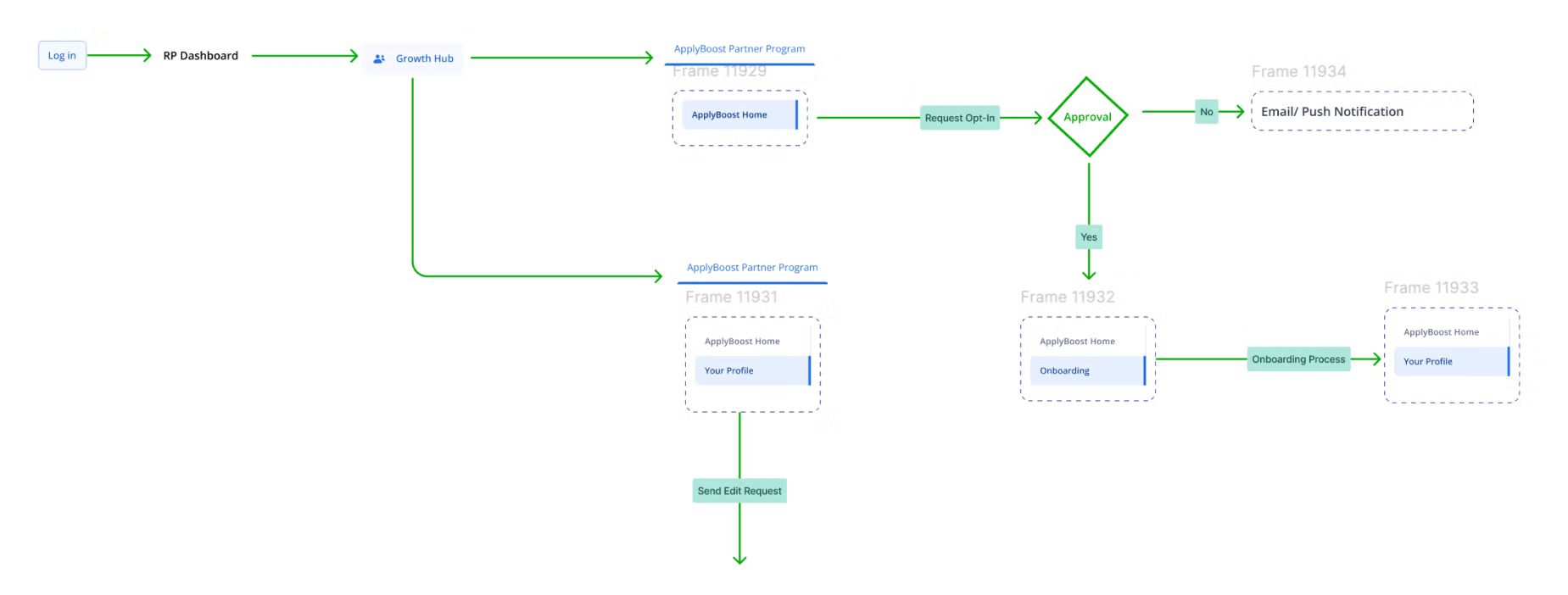
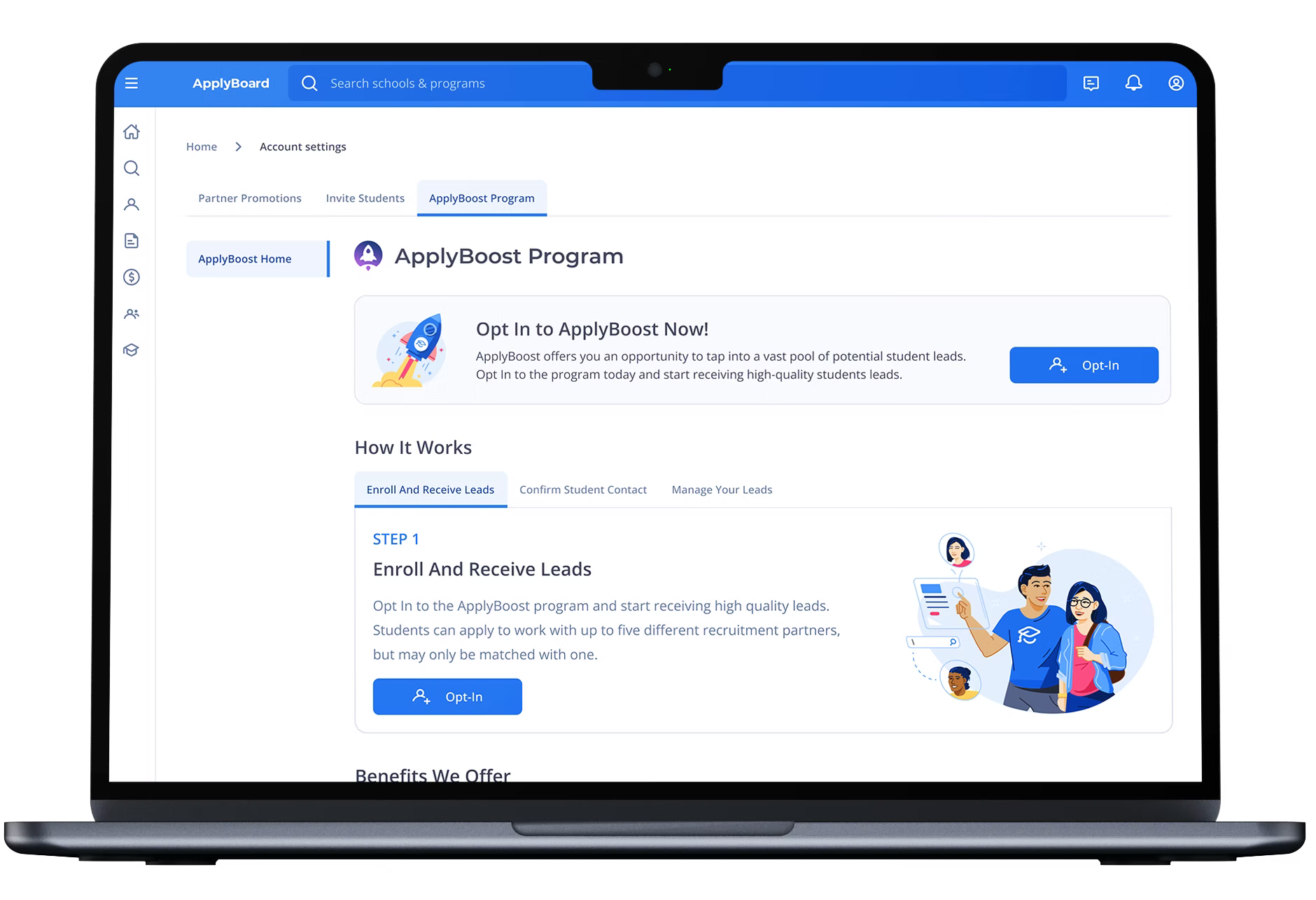
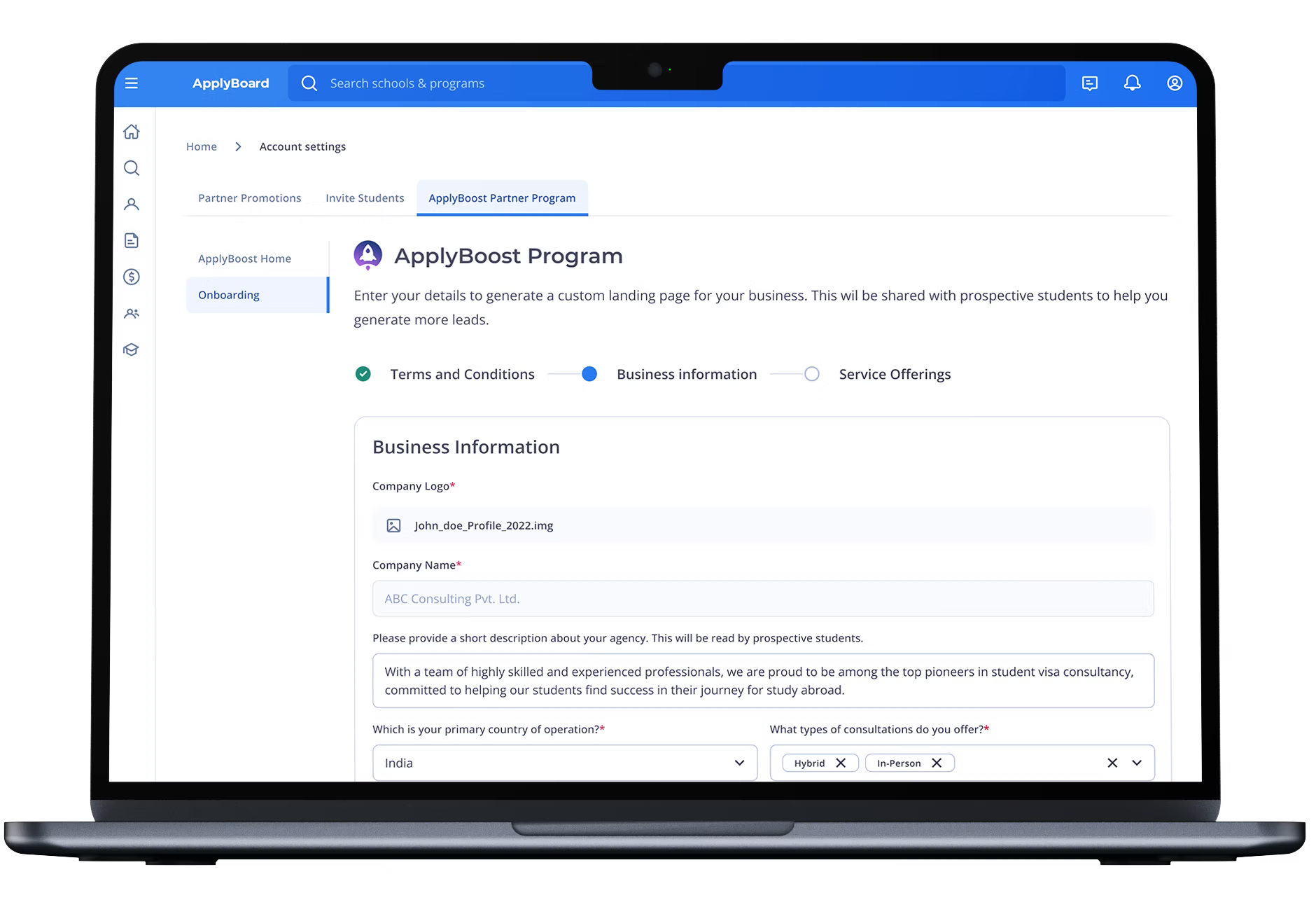
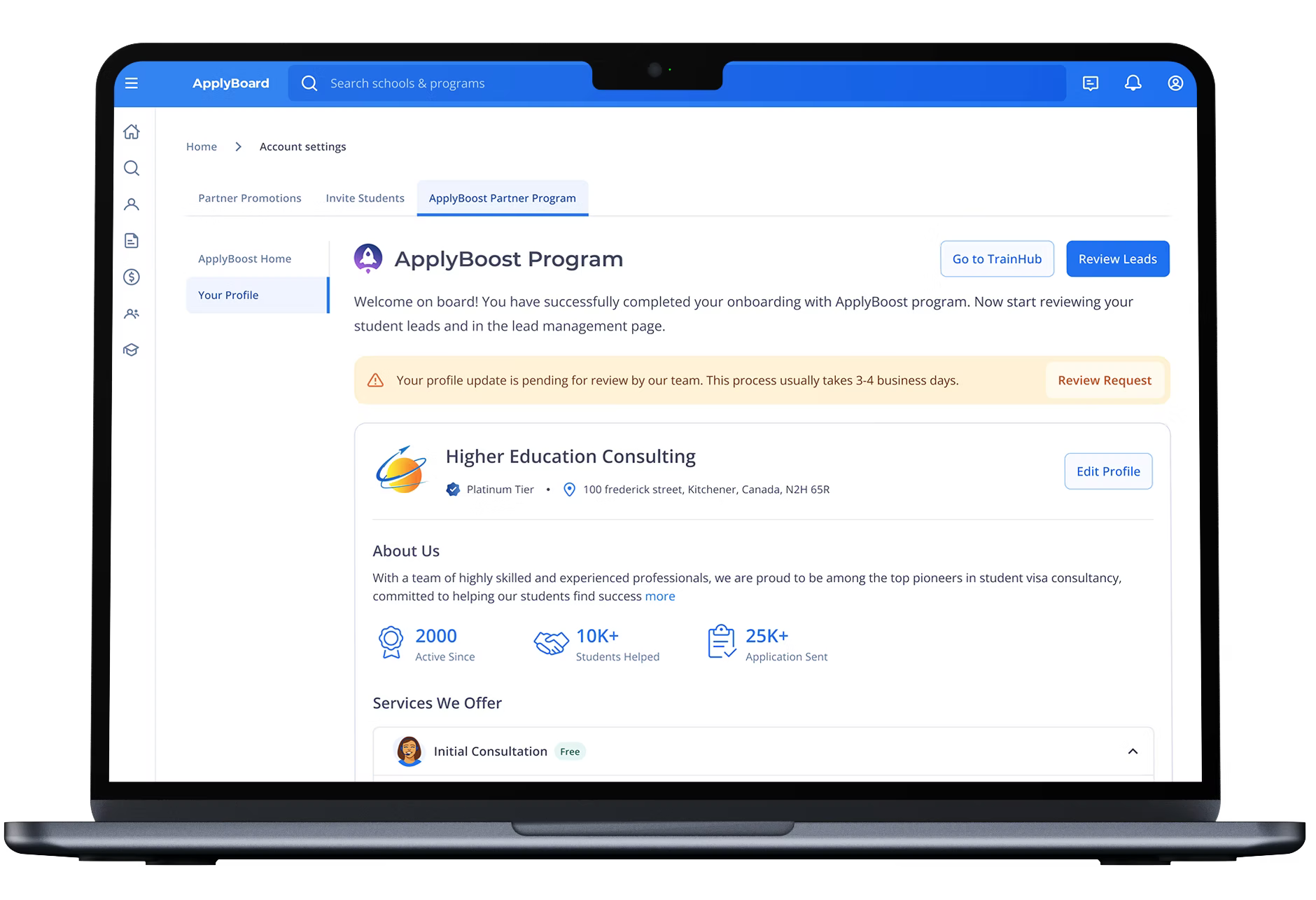
RP Journey: A flexible framework and progress tracking help RPs onboard smoothly, increasing visibility and engagement.
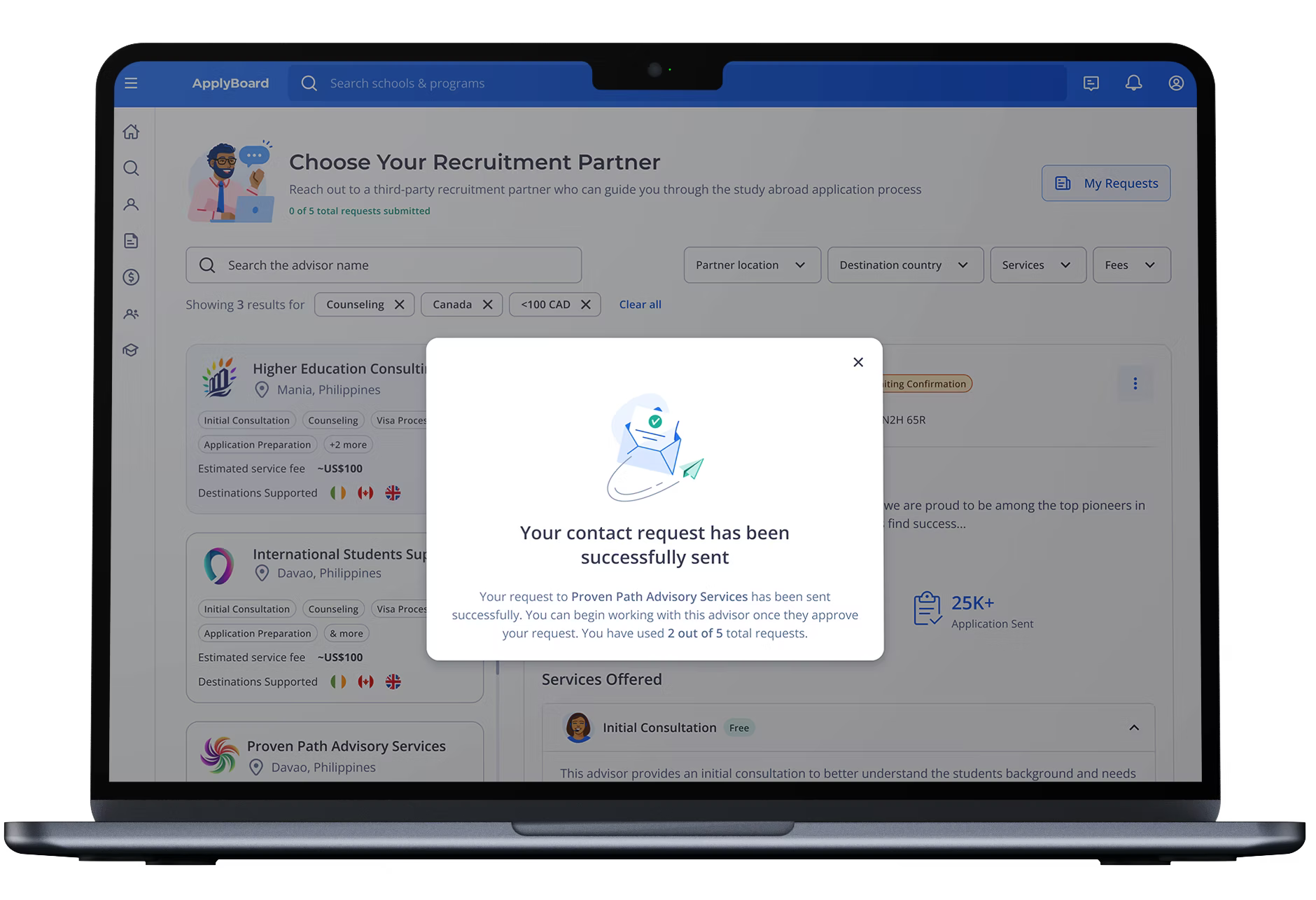
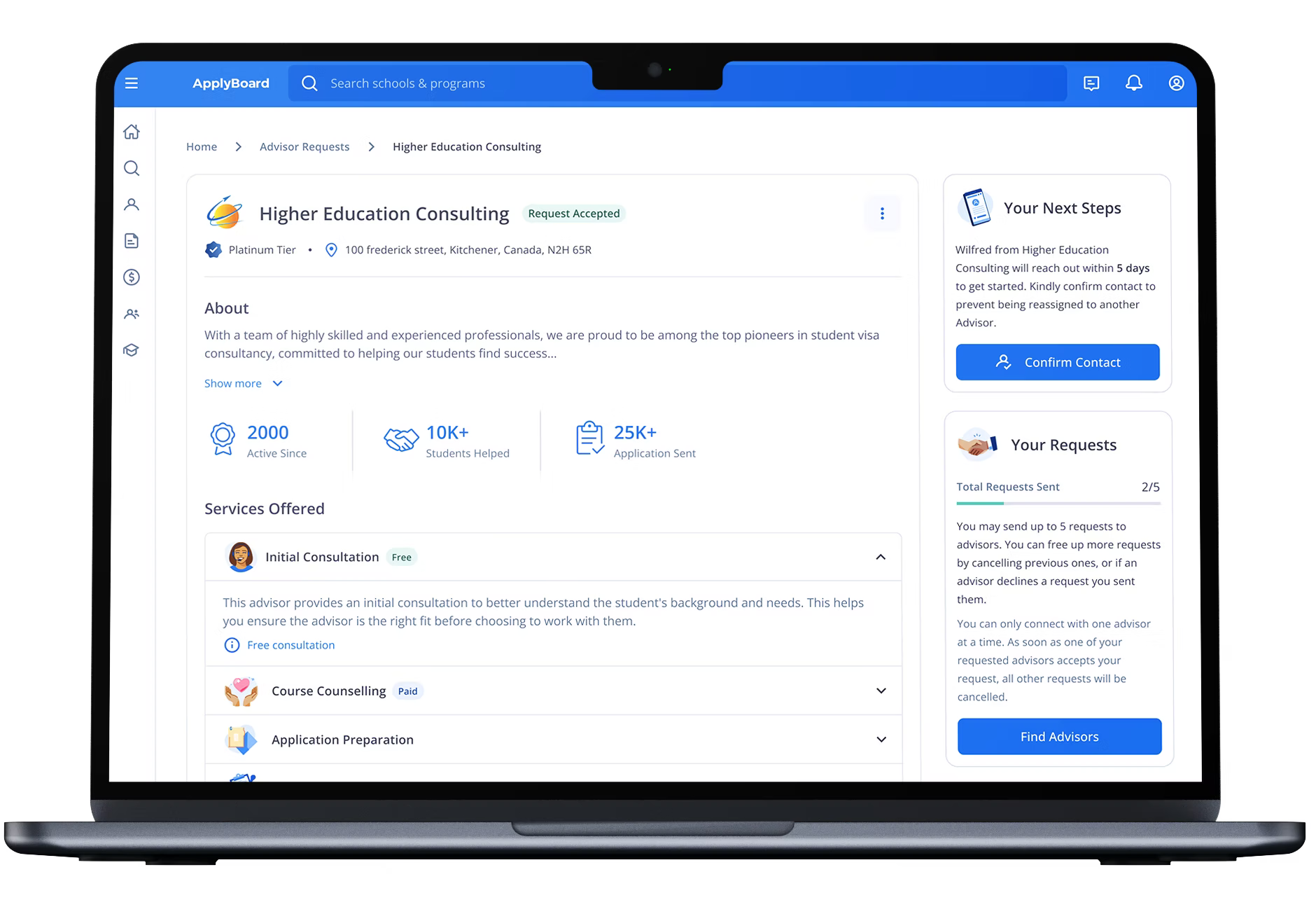
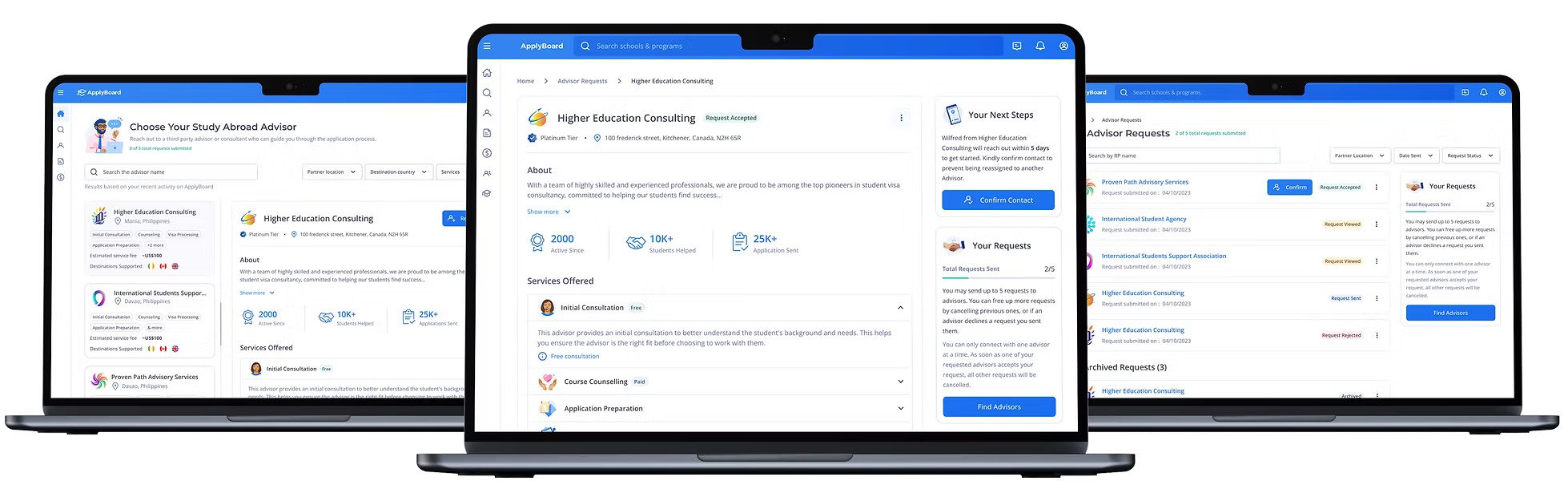
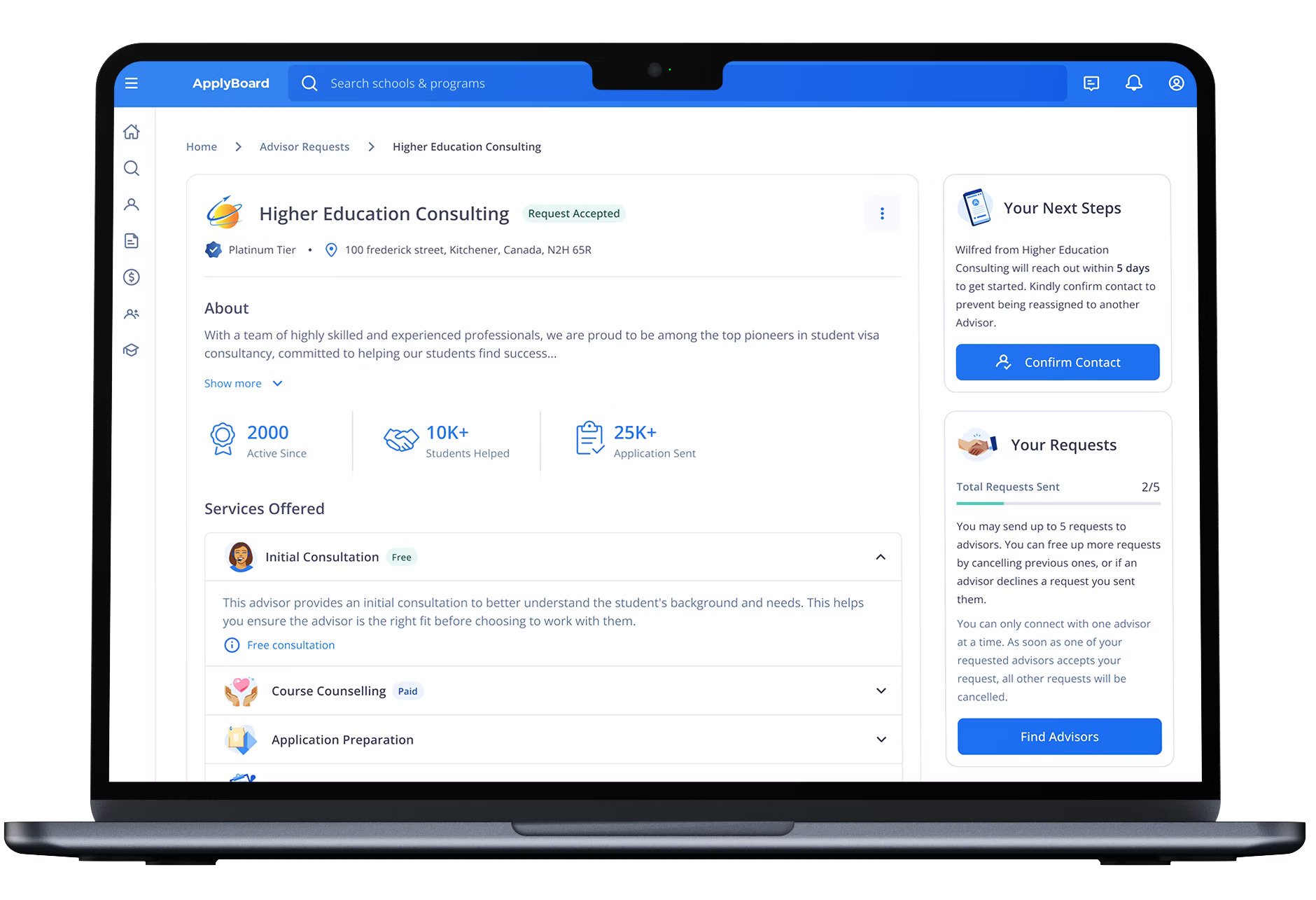
Lead Nurture: A central Lead Status Page allows students to monitor their application status and manage RP requests, while a Stakeholder Dashboard tracks overall progress and an Archive feature organizes inactive leads.
Student-RP Match Framework: Tailored matching criteria align students with suitable RPs, boosting successful applications.
This solution prioritizes transparency, control, and engagement, aligning with ApplyBoard’s commitment to supporting student success.
The goal of this phase is to align user needs with technical constraints, balancing creative ideas with practical execution. It provides clear visual direction for development while ensuring consistency with the product’s design system and brand.
Design Phase
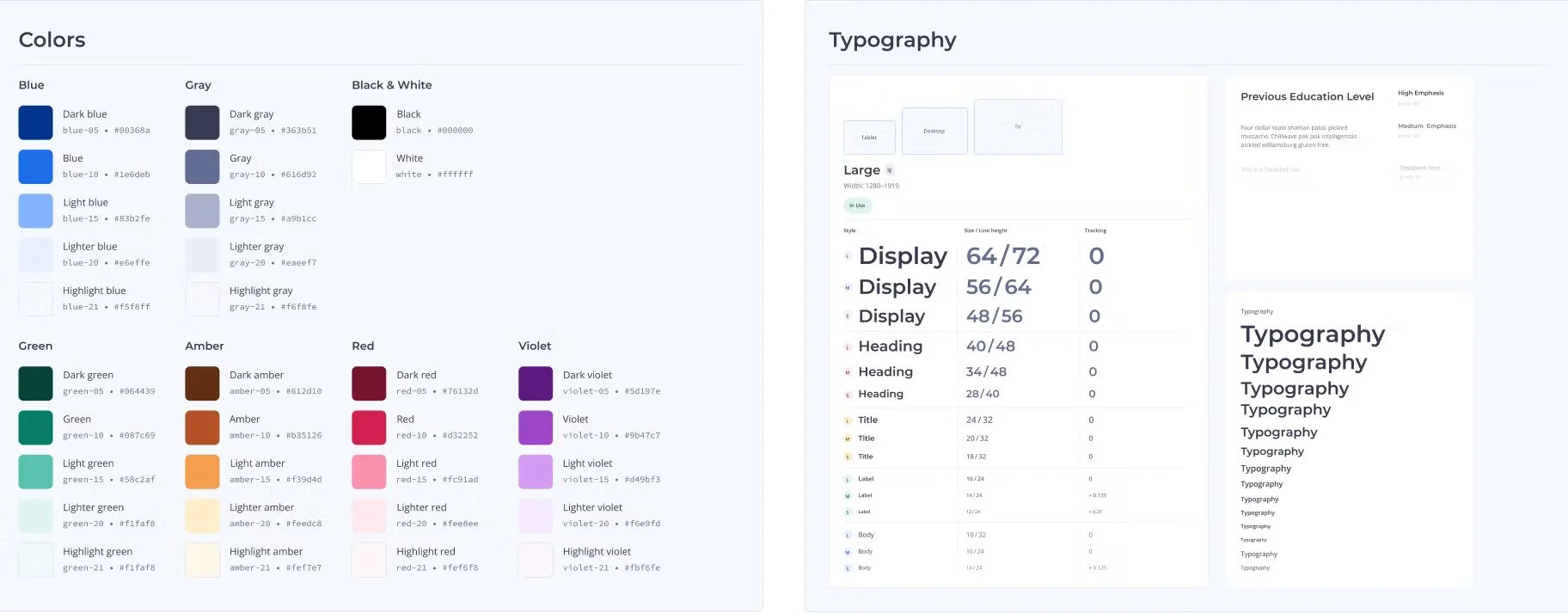
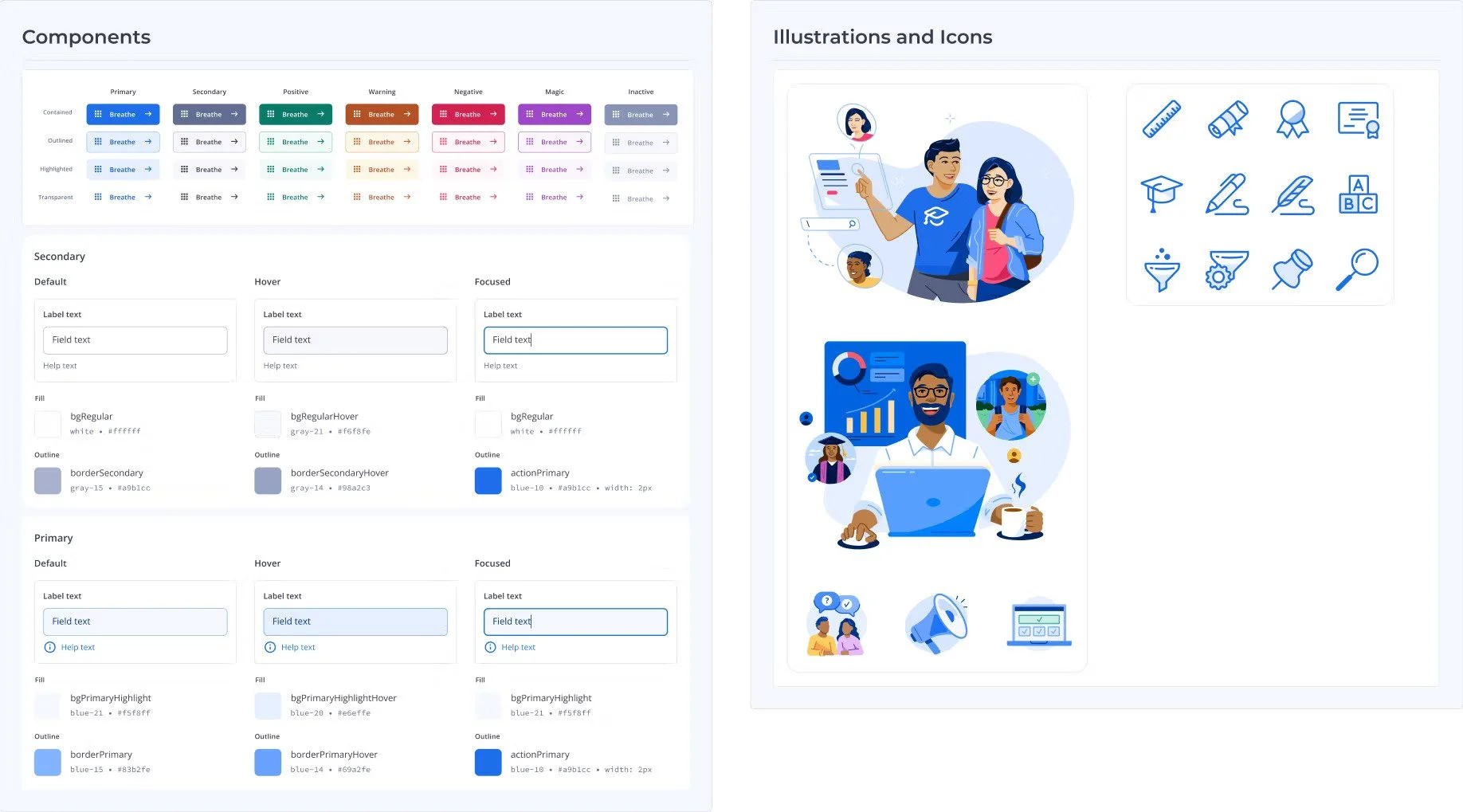
Every element, from typography to iconography, reflects the polished and professional aesthetic of the ApplyBoard Brand, reinforcing familiarity for users across ApplyBoard’s platforms. The Crystal Design System ensures consistency and scalability, enabling UI components that are accessible, adaptable, and intuitive. This cohesive design framework not only enhances usability but also strengthens ApplyBoost’s visual identity, creating a unified experience that aligns with ApplyBoard’s overarching brand evolution.
Hero Flow 1: Student Onboarding & RP Selection
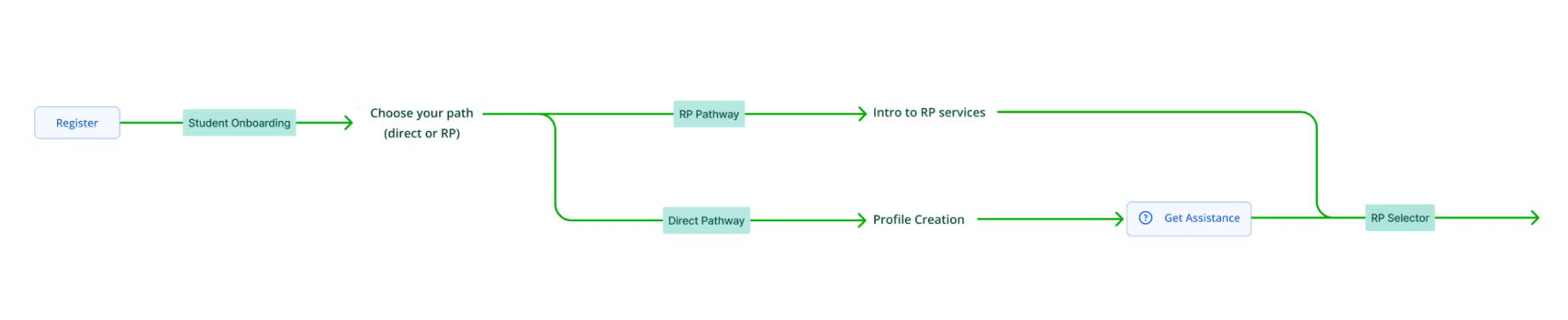
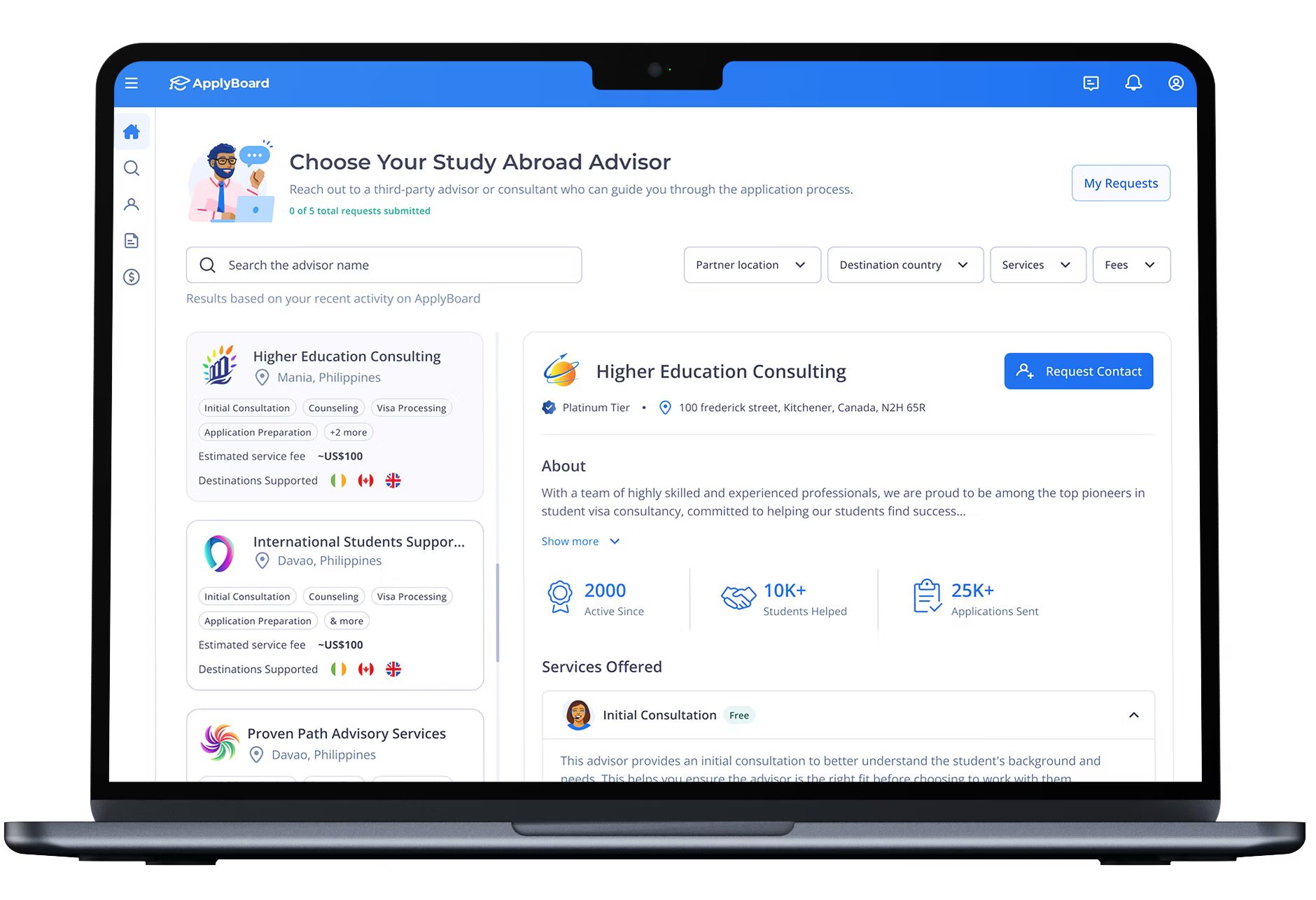
To reduce early drop-off, I redesigned the onboarding experience to guide students through ApplyBoost’s value, eligibility, and next steps before presenting RP options.This approach replaced the previous “direct-to-partner” model, which research showed caused confusion and disengagement.
Key improvements included:
Clear explanation of ApplyBoost benefits and outcomes
Progressive disclosure of RP information
Visual progress indicators to set expectations
Reduced cognitive load at the decision point
RP Journey
A tailored framework is implemented for selecting RPs to join the ApplyBoost program, with criteria that enhance the student-RP matching process. The RP onboarding journey is designed with transparency and ease-of-use in mind, providing RPs with clear pathways to opt in and engage within the program. The flexible matching logic supports the successful mobilization of student applications by connecting them to the most relevant RPs. Detailed onboarding screens and a progress tracker will improve RP accessibility and visibility into the process, facilitating higher engagement and retention.
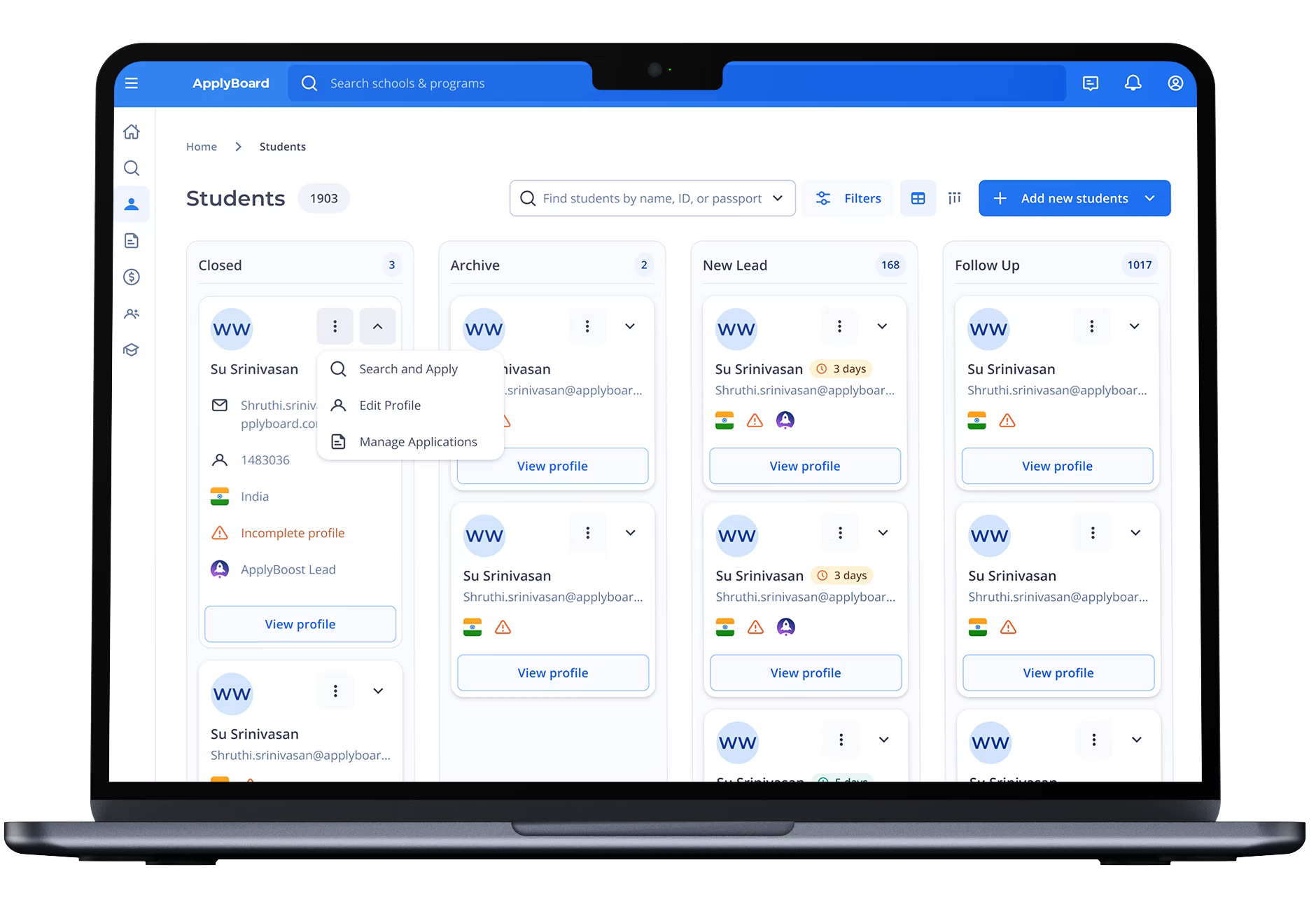
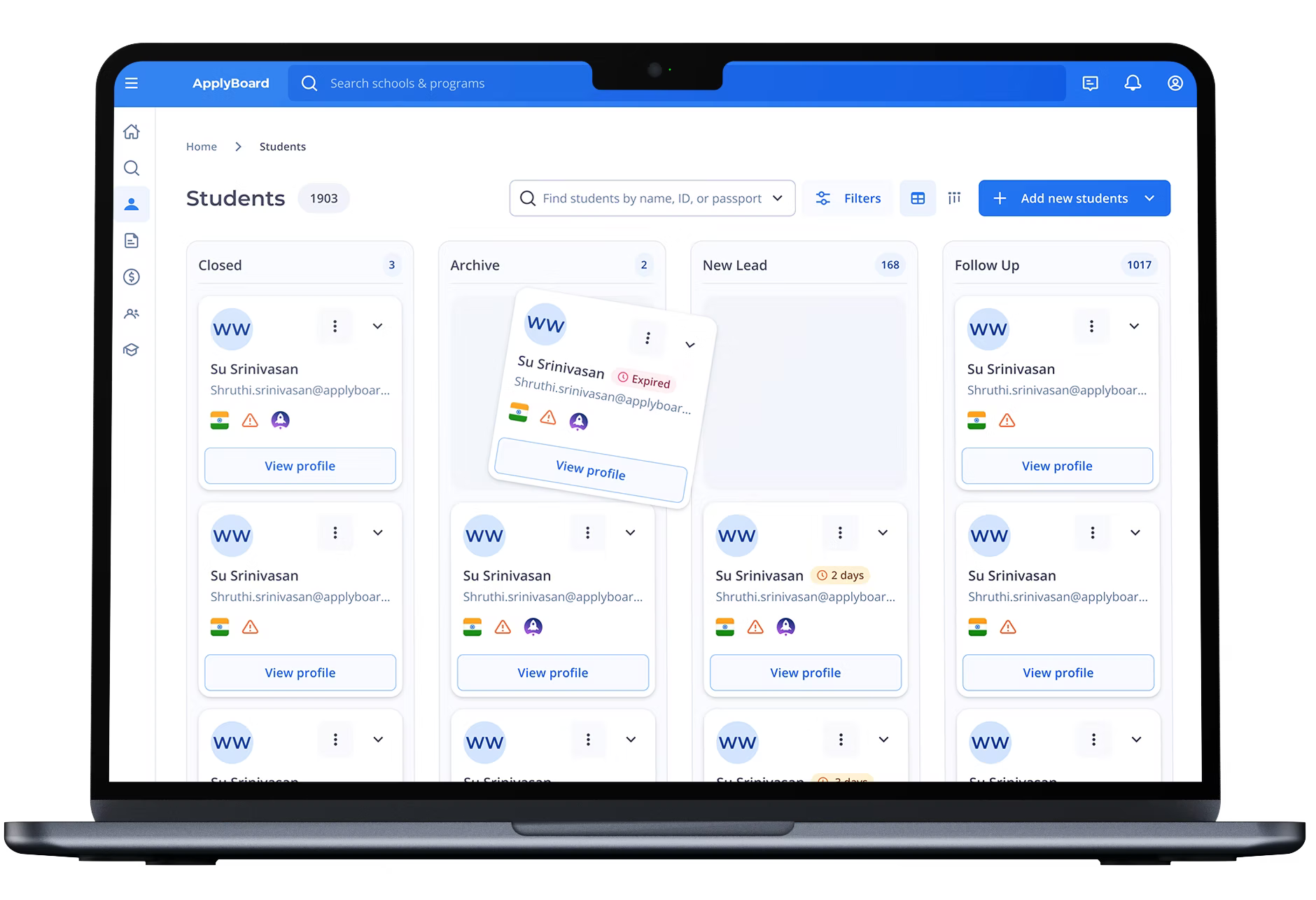
Hero Flow 2: Lead Management & Status Clarity
I redesigned lead states and interactions to create a shared understanding across students, RPs, and internal stakeholders.
Key improvements included:
Simplified lead status taxonomy
Explicit declined and archived states with clear reasons
Improved visibility into onboarding progress
Reduced need for manual follow-ups and status updates
This improved operational clarity while maintaining flexibility for different RP workflows.
Student & RP Match Framework
A tailored framework is implemented for selecting RPs to join the ApplyBoost program, with criteria that enhance the student-RP matching process. The RP onboarding journey is designed with transparency and ease-of-use in mind, providing RPs with clear pathways to opt in and engage within the program. The flexible matching logic supports the successful mobilization of student applications by connecting them to the most relevant RPs. Detailed onboarding screens and a progress tracker will improve RP accessibility and visibility into the process, facilitating higher engagement and retention.