
WILLBE
A safe space for LGBTQ+ youth to help cope with their mental health
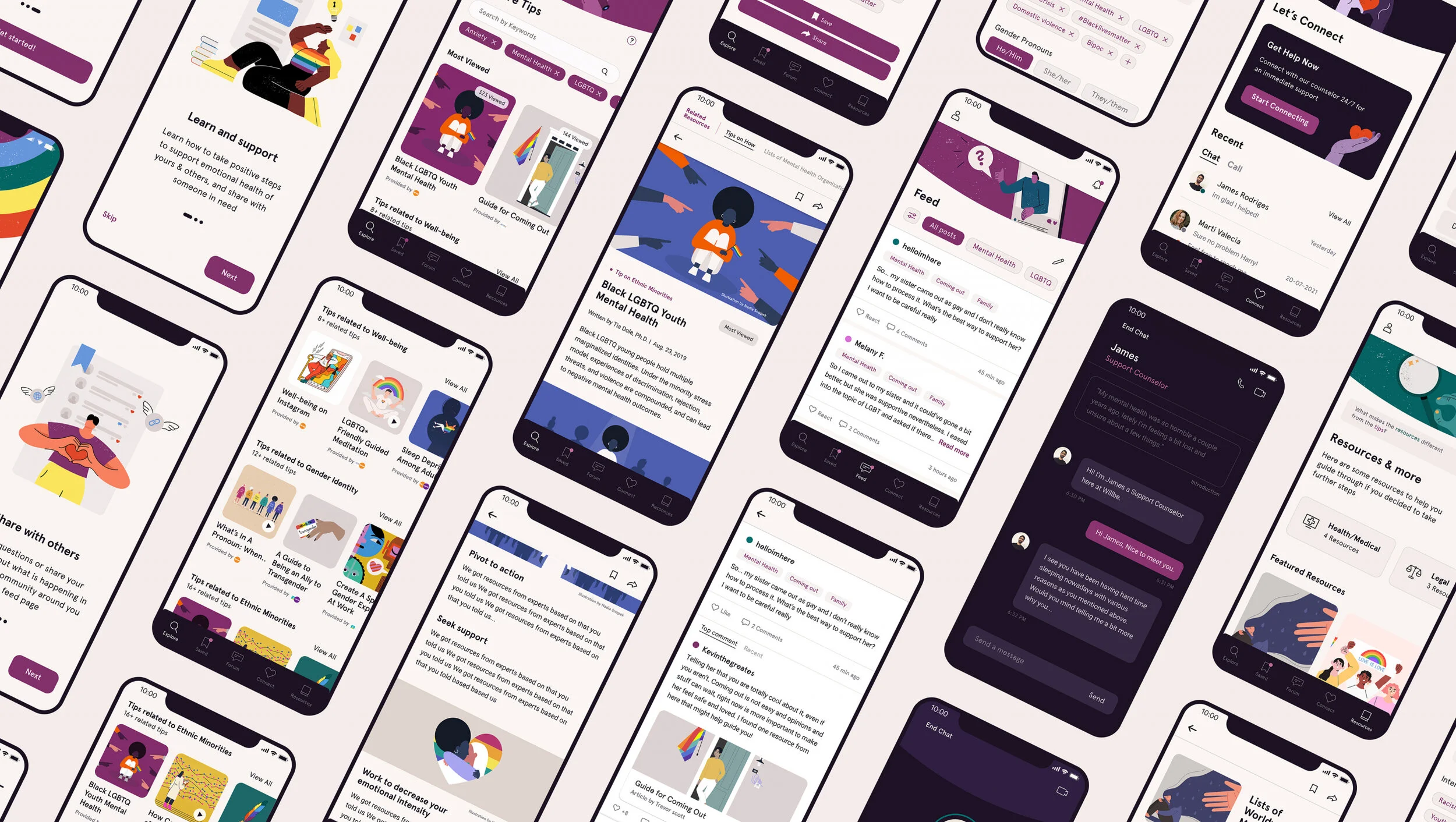
The Digital solution called Willbe aims to provide LGBTQ+ youth an emotional guidance to help cope with their mental health through a discover tip-based approach with a forum and 24/7 community support.
In this case study you can follow along how I alleviated the most crucial pain points that LGBTQ+ youth experience during their lonely journey of seeking help.
MY ROLE
Researcher, UX/Visual designer
TOOLS & METHODS
Quantitative research, Qualitative research, In-Depth User interviews, Information Architecture, UX design, Visual design
TOOLS
Adobe XD, Invision, Photoshop, Illustrator
TIMELINE
Aug - Sept 2021, 4 Weeks
CLIENT
Design Sprint
AWARDS
Design For Good Adobe Creative Jam Top 5 Finalists
Problem Overview
With the prevailing social stigma and discrimination targeting LGBTQ people, LGBTQ+ youth (13-24) across the country face many challenges including suicide, feeling sad or hopeless, fear of coming out, discrimination, physical threats and exposure to conversion therapy. Many of them bullied in school, not supported by their family, and unable to reach out to any school counseling system or health care providers outside their community due to severe discrimination. Although some said they have other friends/peers they can talk openly about their identity and sexual orientation, many still struggle to find even single support with their life.

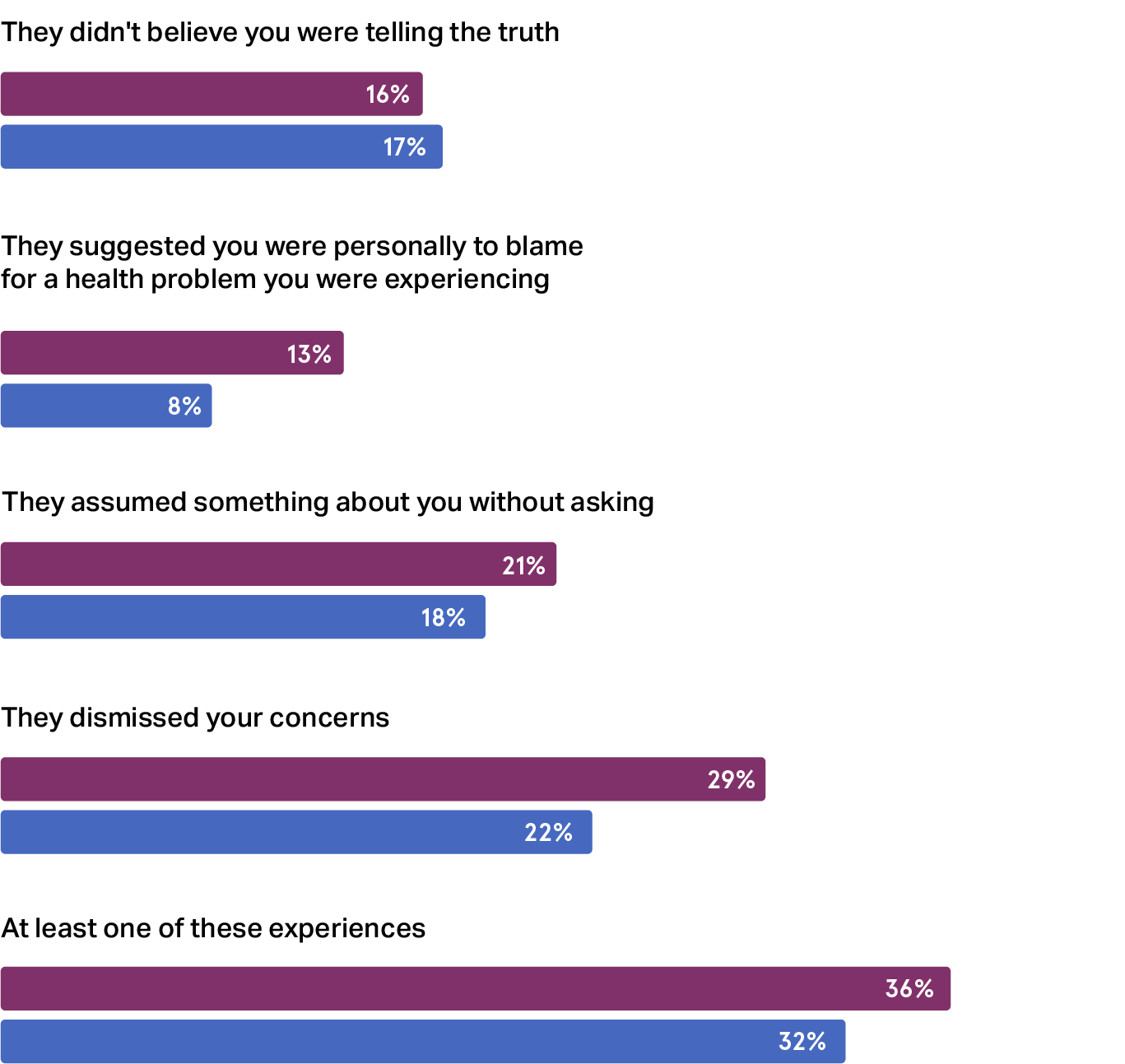
Negative experience that LGBTQ+ youth experience with health care providers and school counselors
As seen from the statistics from KFF. The biggest problem was that most health care providers or counselors (graph colour indicated as purple and blue for each) did not validate or understand what LGBTQ+ youth go through, which discourages LGBTQ+ youth from seeking further help. Many LGBTQ+ youth feel pointless to talk out to someone that wouldn’t understand them and even blame for having many health issues.
Needs for safe space-online sites and an immediate support.
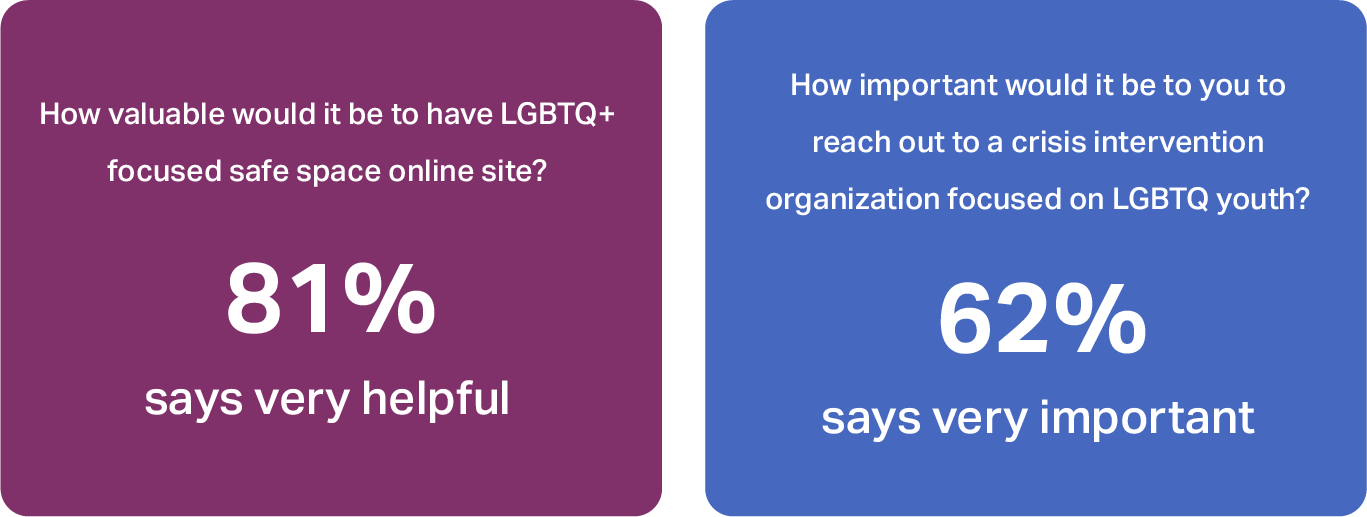
From Travor Project, I also found out the massive needs of the presence of safe-space online sites for LGBTQ+ peers, with more than 80% said it would be very valuable. Also, aligned with having difficulty accessing desirable health care providers and counseling services, more than 60% answered that an immediate counseling service that are LGBTQ+ friendly would be helpful.
Having known what my target users need and want, I was able to expand my ideas, thinking there should be a way to build a solution to bring many LGBTQ+ community members together and help them find genuine peer & professional support whenever they want.
“What if I help LGBTQ+ youth to cope with their mental health issues on their own?”
It was where my ideas began, as I found from my research about the importance of educating health professionals & counselors to prevent LGBTQ+ youth from being neglected. But if it’s not possible to educate all of them to truly support LGBTQ+ members in short terms, instead, I can provide valuable tips and resources directly to LGBTQ+ youth to help themselves be more aware of their own issues, cope with them better, and to take further steps if needed.

Who’s my user?
“Who am I designing for and what are the challenges that LGBTQ+ youth face when seeking help?”. I kept asking myself these questions as I tried to define the problem space and who to design for. I started first by narrowing down my user group to the LGBTQ+ youth in North America between the ages of 13 - 24 (teens to young adults) as this age range has the highest rate of mobile adoption (source).
OPPORTUNITY
92 percent of young adults (18-24) shows active usage of smartphones with 95 percent of teens (13-19) have access to a smartphone as well. it is expected that mobile support/social platform will proliferate and this will change the way LGBTQ+ youth potentially seek support as 76% of LGBTQ+ youth indicated that they would be likely to reach out via text or chat in a crisis (Source)
HYPOTHESIS
Based on my research results, I believe that LGBTQ+ youth have negative experiences with the professional & peer supports around them because of there are lack of awareness of their mental health. I also believe LGBTQ+ youth are seeking alternatives to ease their mental health issues.
What user interviews made me realized
I conducted user interviews with 5 target users, and I was able to capture,
“I started to realize that I wasn’t like everyone else, I knew I was different, I just had no idea how. I wish there were some sort of resources to help me deal with this huge confusion”
“For a long time, I’ve known that Im bisexual but I’ve never told anyone. It scares me that my family or friends won’t love me the same once they find out... I want to let go”
““When the pandemic hit, it was already familiar to be at home in my room longing for a community connection, except this time I knew a critical mass of other queers out there””
“I live in the religious countryside where being homosexual is a ‘Sin’. No one in my family or my friends knows about me because Im afraid that someone might figure it out”
Here are the insights that I draw,
1
Interviewees complained about having lack of to no guidance & resources in the school or community they are in. They preferred video resources than the article formats as they think they are more easily digestable
2
Interviewees stated that simply sharing their struggles and talking out loud both in written and verbal forms would be really helpful to cope with their mental health
3
Interviewees responded that they are reluctant to openly talk about their mental health issues to others as they are afraid of being judged
Who am I designing for?
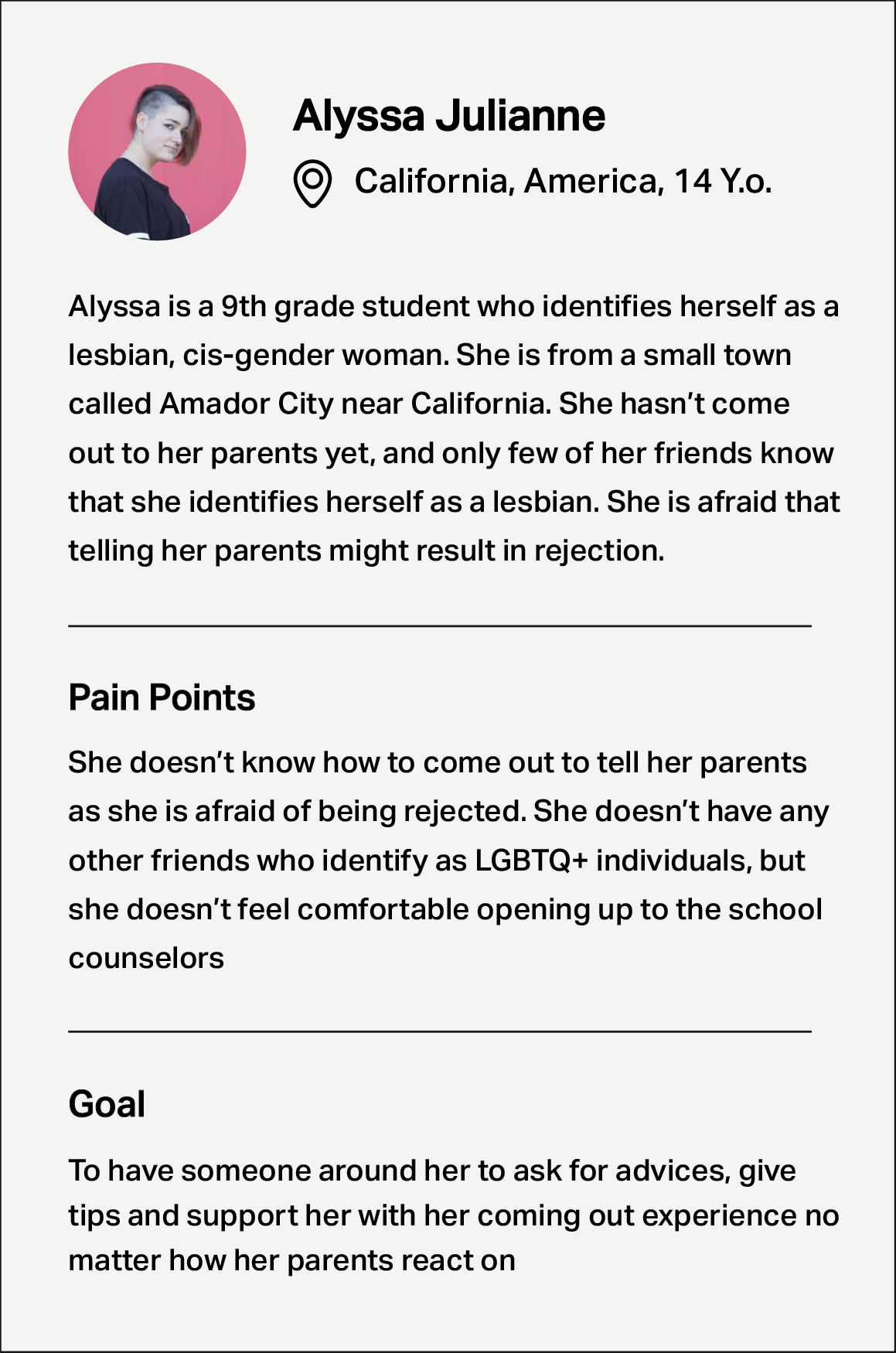
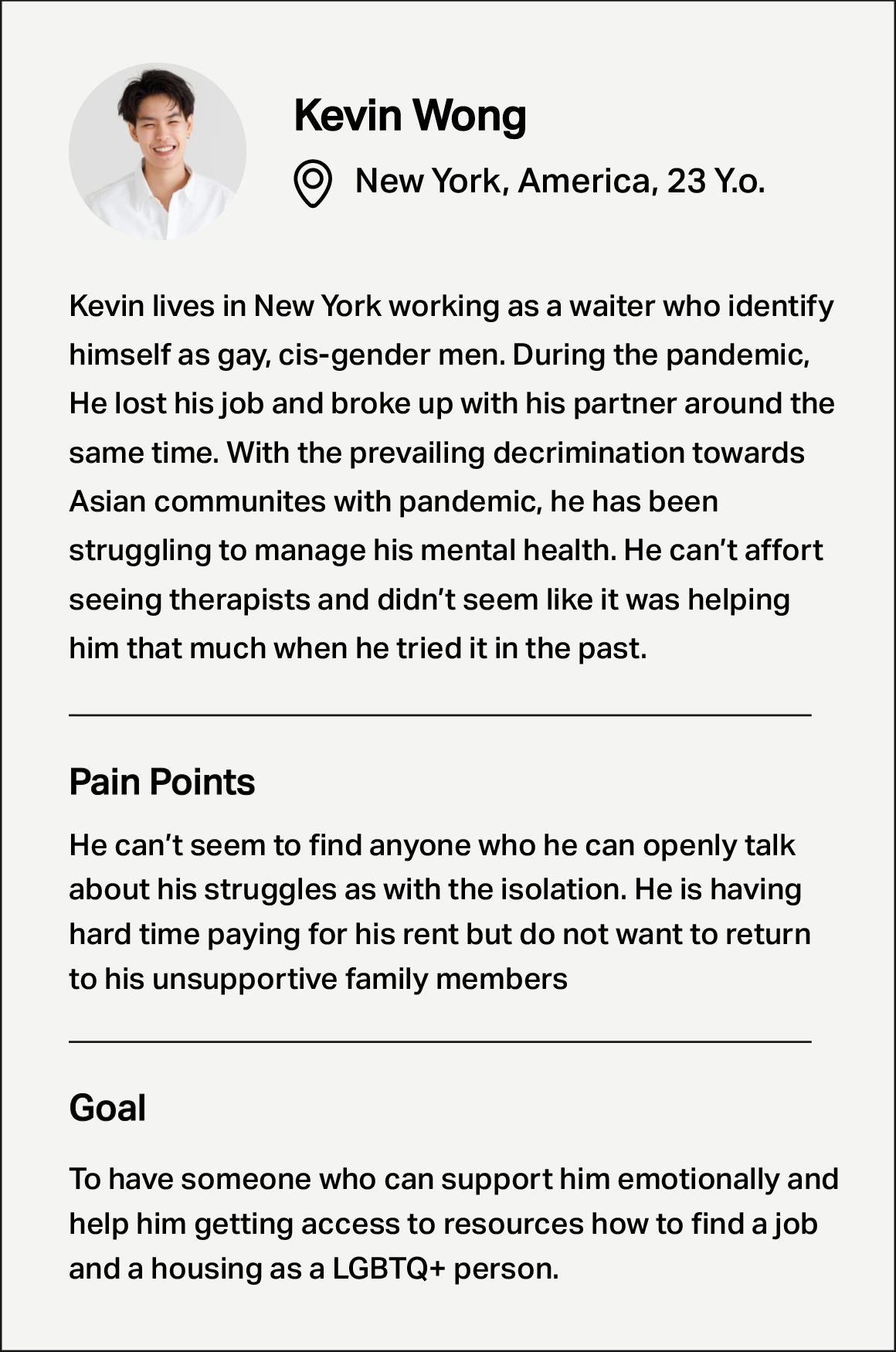
From the research session, I was able to come up with two proto-personas and prioritize features to support them.
REFRAMING A PROBLEM STATEMENT
“How might we design a safe space for LGBTQ+ youth where they could be supported, guided, and understood?”
Some possible solutions include:
1. If I create an intuitive tips & resources library, then the user can cope with their own troubling topics in a mindful manner, because they can better understand what they are going through.
2. If I provide 24/7 counseling support, then the user can seek prompt help with no/fewer constraints, because they can reach out for support anytime & any day.
3. If I allow users to write up their ideas, questions, and concerns without being judged and share them with others, then the user will feel less alone, because they can feel a sense of community with others.
Considerations
Intuitive videos and articles
How do I use videos and articles to educate users? How do I make users to trust the still and video contents provided? where and how do I source these contents from? What types of information do users want from the contents?
Importance of moderating
How do I guarantee the safety and privacy of the users? What if there are conflicts between users? How do I maintain positivity and support with zero judgement? Do I need a moderator for this platform?
Finding right counselors
How do I find the right counselors or volunteers to help users? How do I determine their qualifications? How do I keep their availability 24/7? Do they need prior training?
Explore Different User Paths
After gaining a better understanding of users current experiences and found the potential digital solutions, next step was to build an interactive prototype that meaningfully reflected the user goals and needs and alleviated their core pain points. To begin ideating on the functionality and features of my solution, I created numerous user stories and categorized them under different epics.
Epic 1
Finding a way to learn to cope with their own emotions or to support friends or family in needs mindfully
Epic 2
Looking for an immediate support when having emotional crisis
Epic 3
Wanting to share own stories, questions, and concerns with like-minded others
Epic 4
Finding right resources to get further help (housing, work, health care, etc.)

Information Architecture
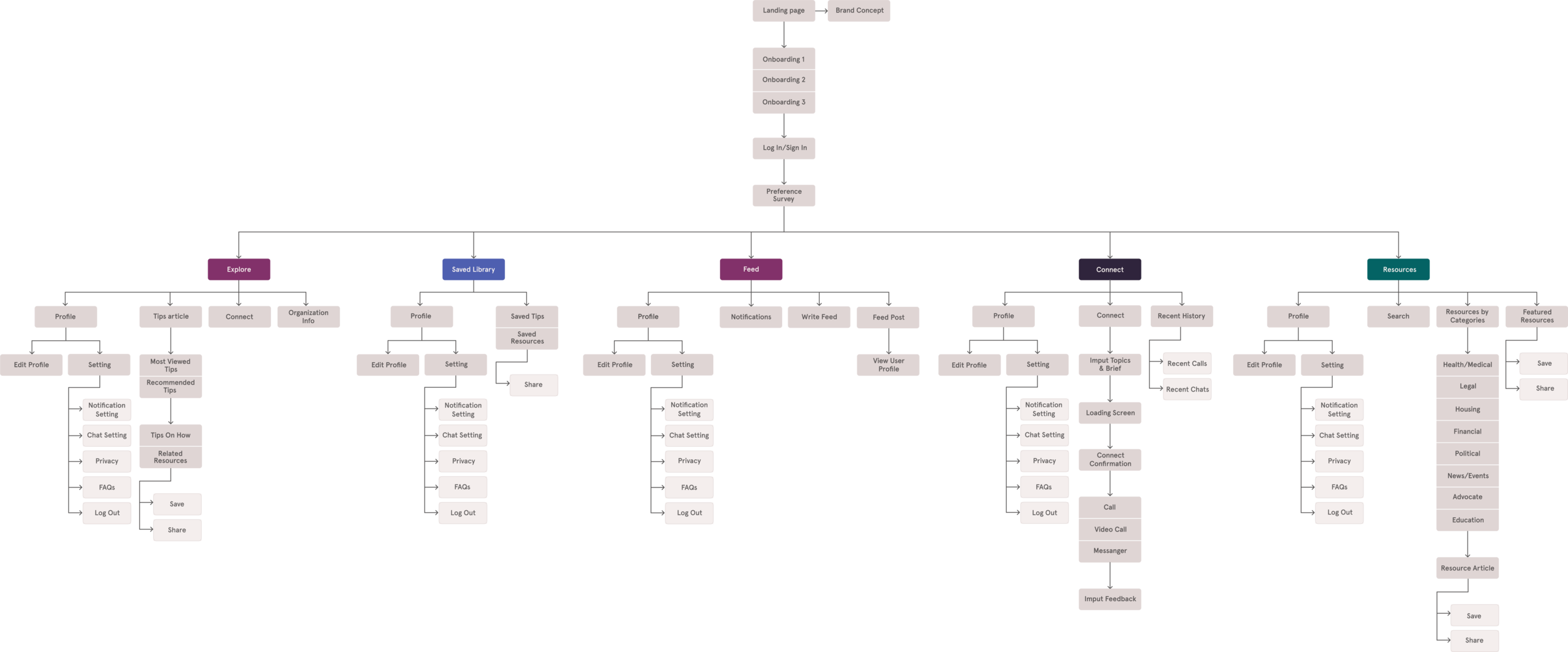
Once I had established the different user paths, I mapped out an information architecture to re-evaluate if those solutions can successfully sit on our product and how they interactively work within the hierarchical structure. This way, I can understand how potential users interact with our product.

Ideation of the Wireframes
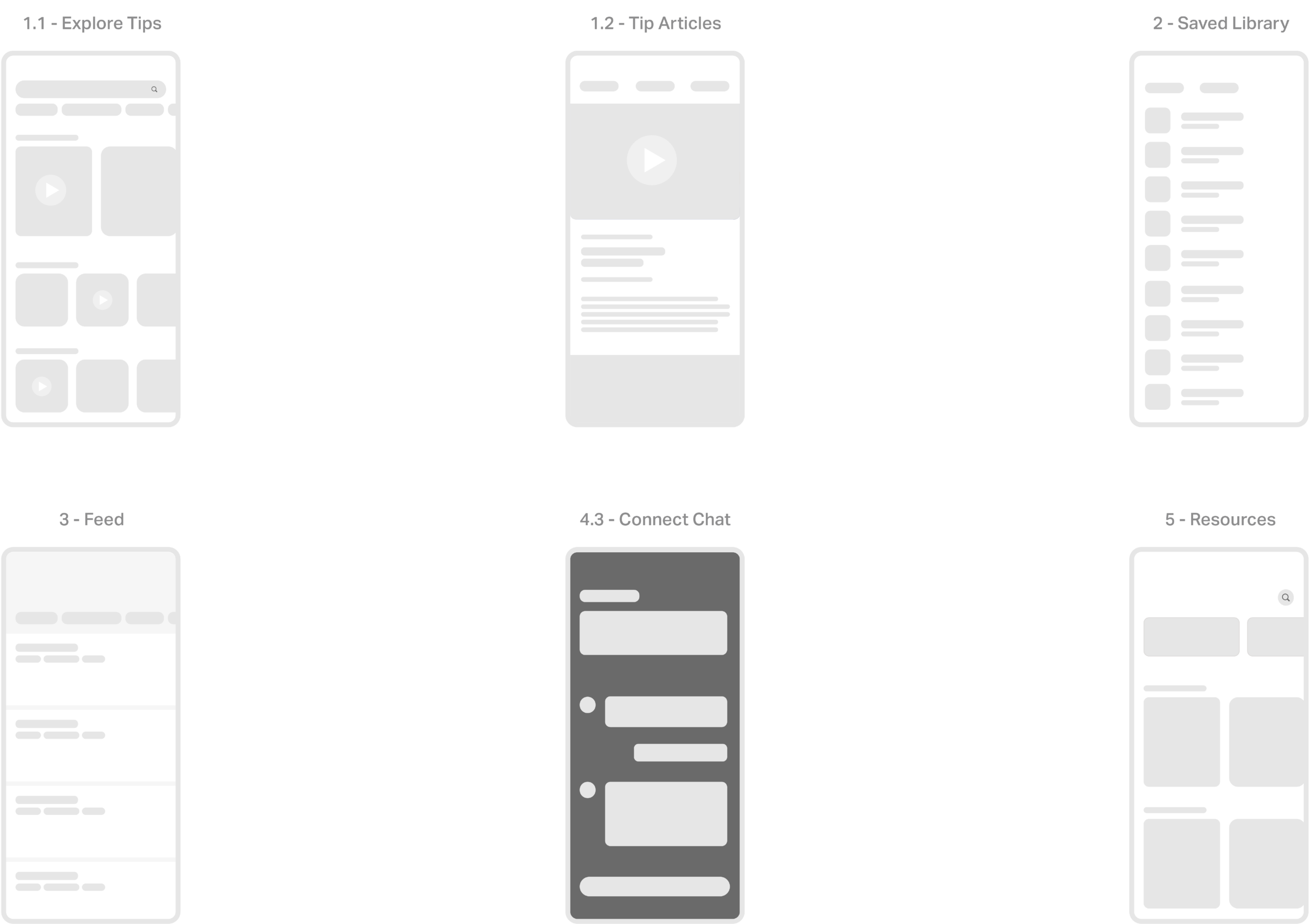
After defining the primary navigations and the hierarchical structure of the product, the next stage is to design low-fidelity wireframes and define different screen stages. I decided to start creating the most essential screens like tips and resources articles that are unique to this app and continued by defining other screens to make the whole user journey seamless.
The main takeaway was to find the most efficient way to display numerous tips, resources, and feeds content and categorize them in an understandable order based on each user’s personalized selection. And enabling users to easily change their selections by deleting and adding pill buttons that include each topic that they resonate with the most.
Visual Design
Typography
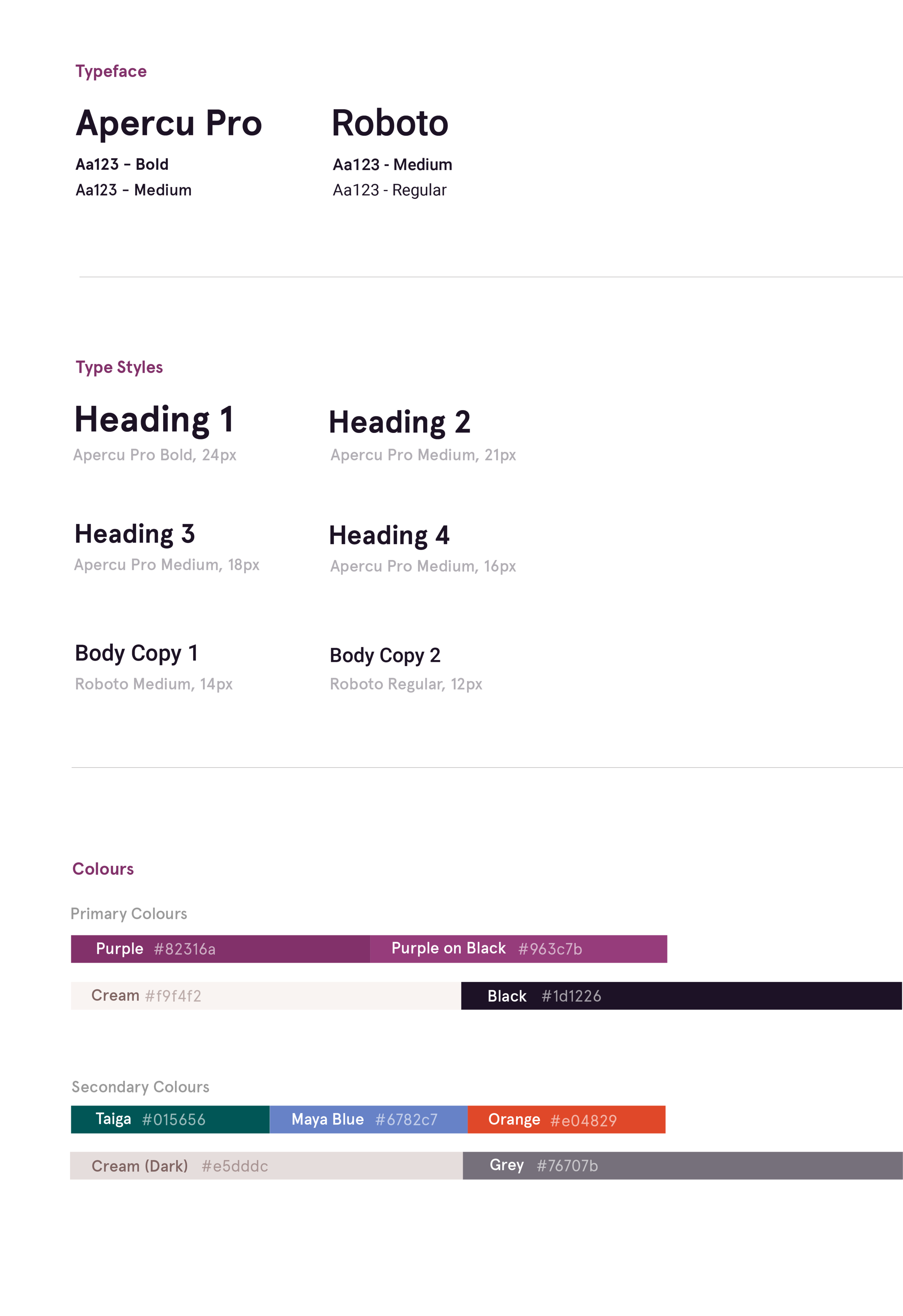
The primary font is Apercu & Roboto, which brings editorialism unlike many other sans serif fonts. It seems both firm but approachable and helps users read/view text-heavy content.
Colours
The primary colour is purple (Hex: #82316A) with cream (Hex:#f9f4f2) and black (Hex: #1d1226), The secondary colour palettes are Taiga green (Hex: #015656), Maya blue (Hex: #6782c7) with an alert color of Rich Orange (Hex: #e04829).
Purple put a period of the colour of the rainbow, which represents the LGBTQ+ community. Purple also brings nobility and power, which resonate with the users feeling valued and understood during the journey. It is also a gender-neutral tone that encompasses every single user being included as part of the community with diverse sexual identity/orientation. Cream tones down and gives a sense of comfort and calmness, which we believed is a key emotion we would like for users to feel.

The final solution
After establishing visual design elements, I came up with high-fidelity designs for the product. I created the logo, branding, illustrations, and the colour scheme for the mobile application.

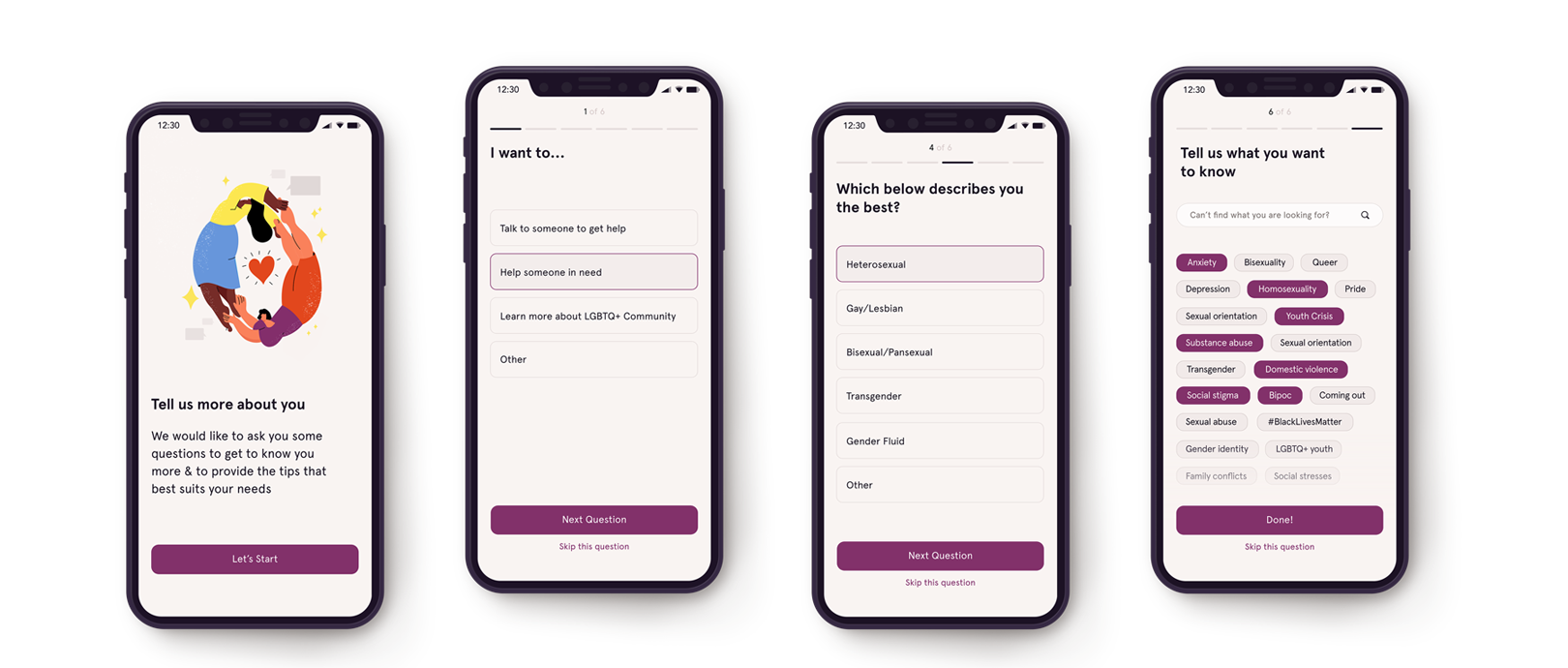

Introductory Survey
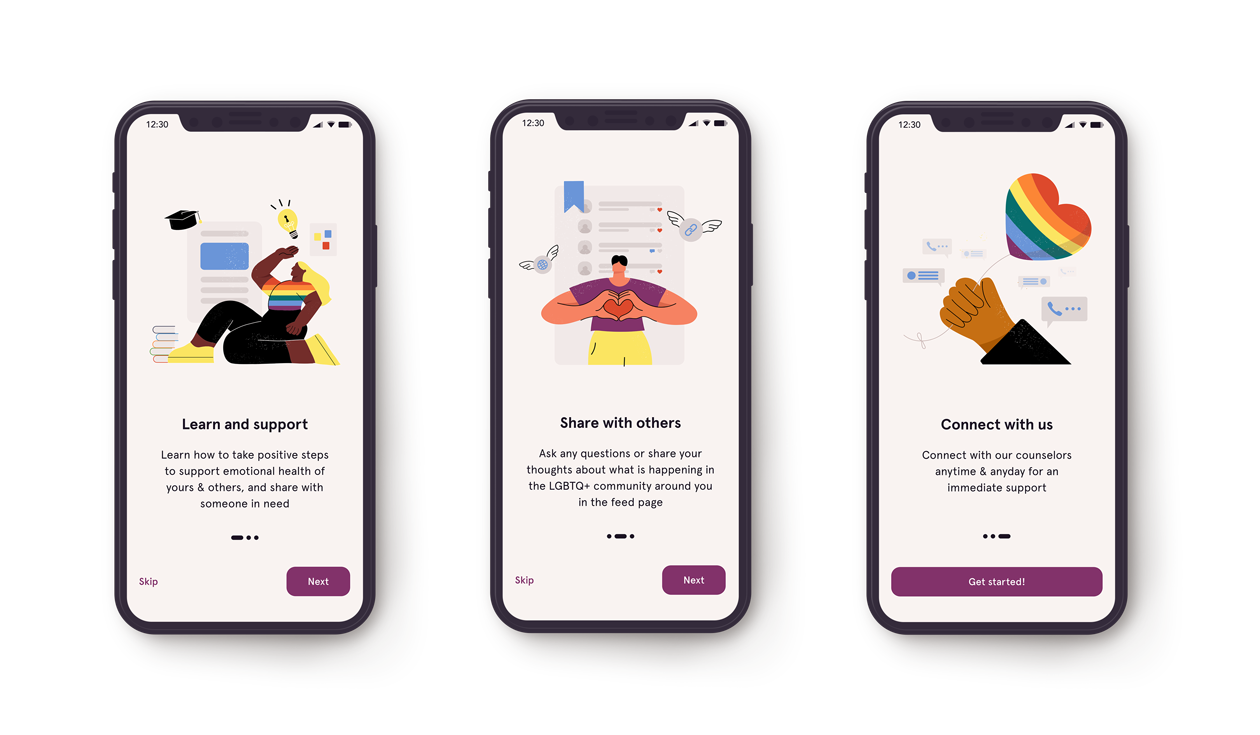
The users are asked to answer simple questions including their goal, their gender identity, their sexual orientation, age, and ethnic background. At the last stage, they are asked to choose topics they would like to learn and discuss to suggest contents that are more gearing towards each every users.

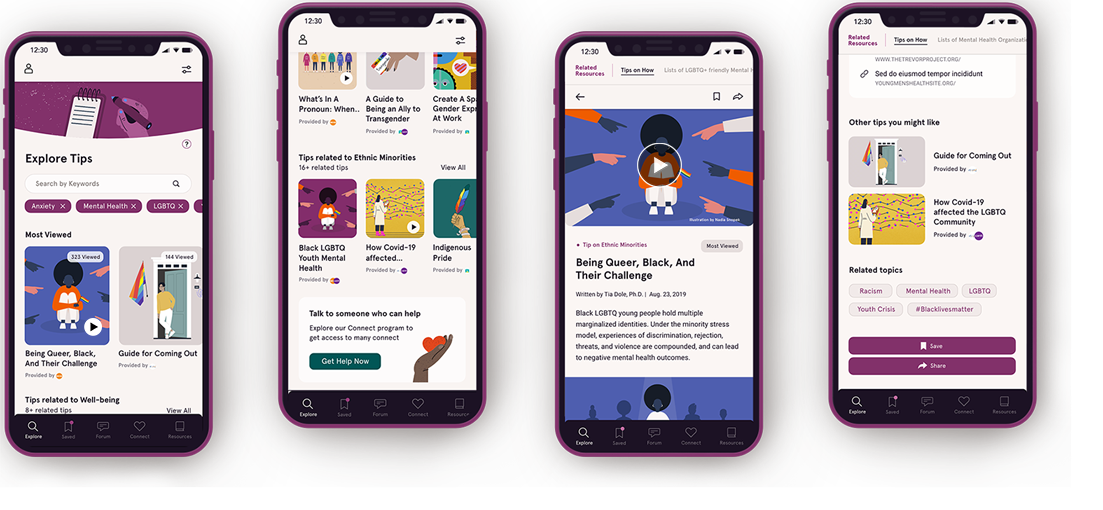

Explore Tips
Based on users’s selections, the app allows users to explore topics they are dealing with and match them with tip-based solutions to help them cope with troubling topics in a mindful manner.
The tips are made in videos or article formats that include the general information, ways to cope, links to other resources, other related topics, etc.

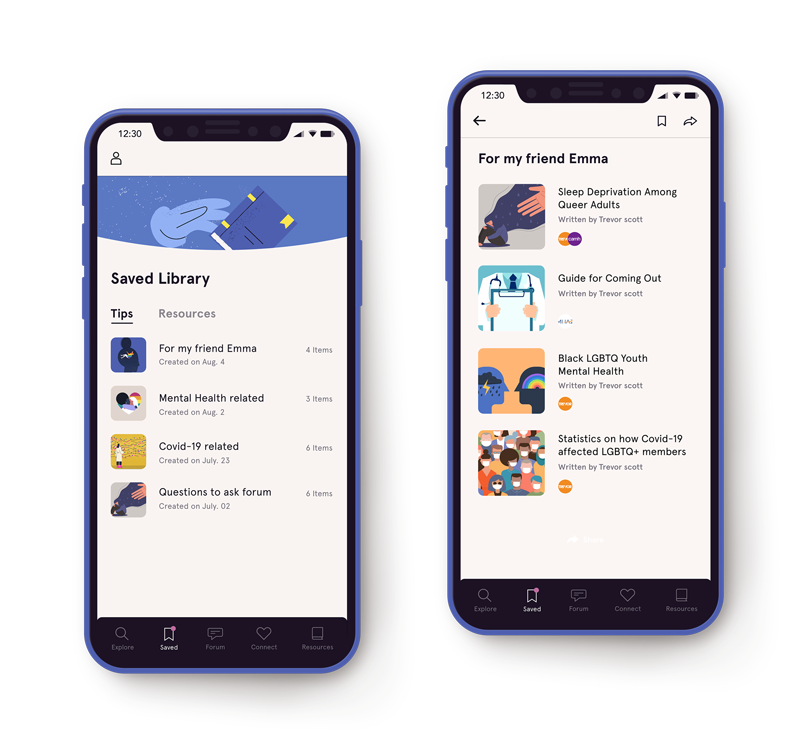
Saved Library
The users have the ability to save both tips and resources and share with others in need by creating intuitive library

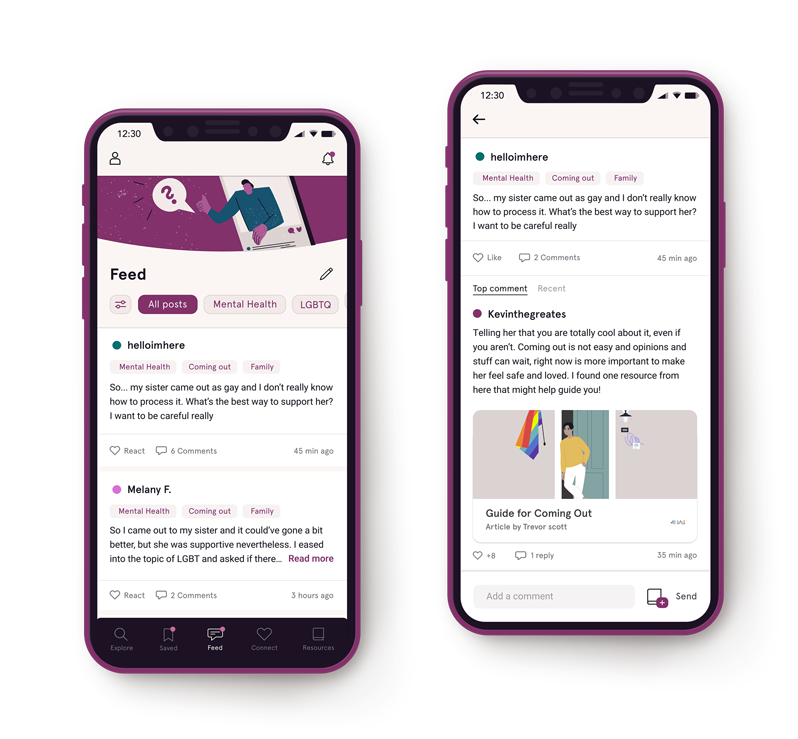
Feed
The users can ask questions, share concerns or simply talk out their feelings to other like-minded users. Many other users can leave comments, react, and upload tip contents following up with each posts.

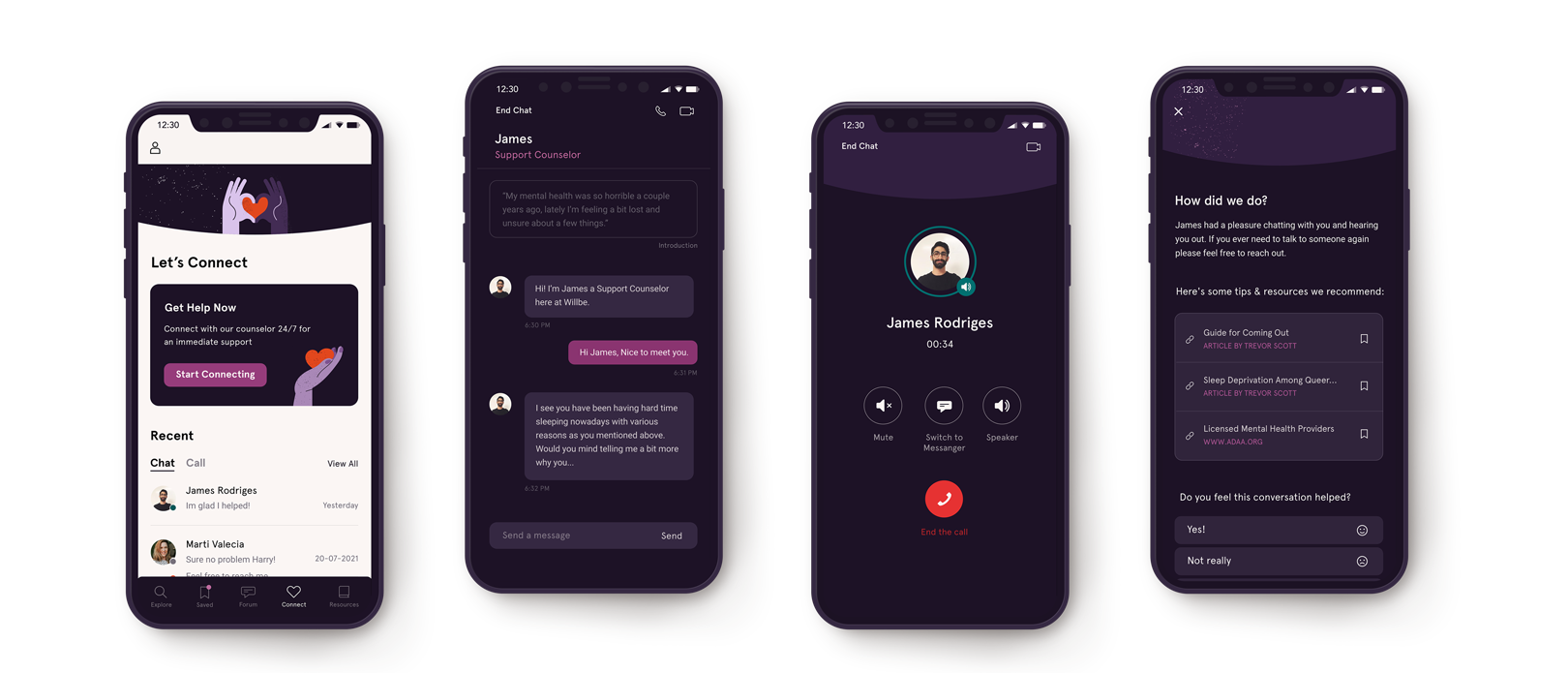

Connect
The users can connect with verified counselors 24/7 within a few minutes when having an emotional crisis or chatting with someone about relevant topics. The users are recommended to choose topics before connecting for them to find the most suitable counselors. They can choose to communicate via call, in-app message, or video call as they prefer. The verified counselors suggest links and resources that might help them with their challenges after the conversation.

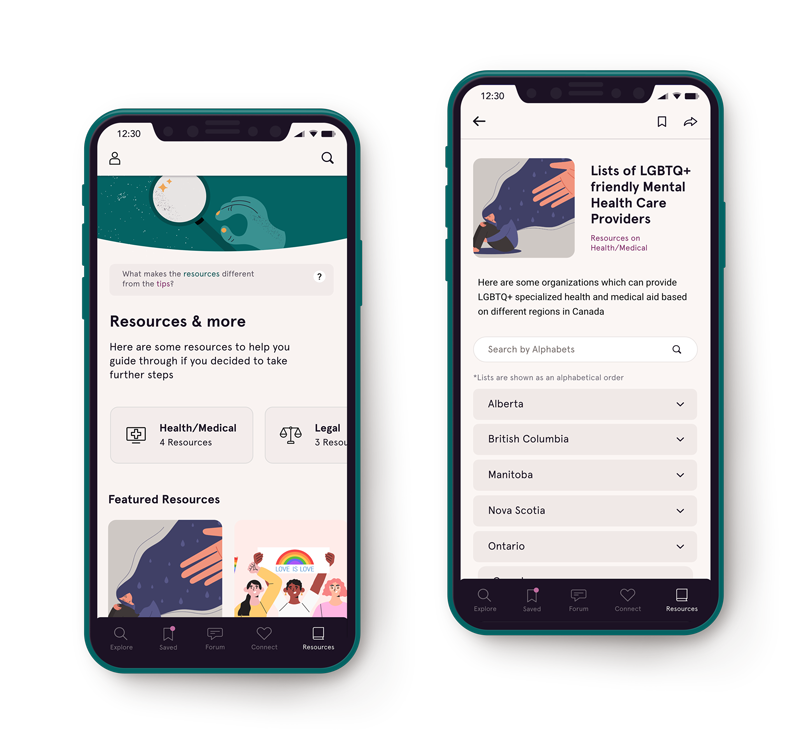
Resources & more
The users can access to other resources as in categories of health/medical, legal, housing, financial, political, news/events, advocate, and education.
What are the next steps?
How Do I Ship to the Market?
If I were to develop this and ship it to the market, we would like to track engagement and time spent in the app.
A developed marketing website may include strong value proposition to resonate with the target audience. I believe Incorporating features such as testimonials, press features and a vision of what pricing for this service will be for the future monetization will foster trust in our brand and conversions.
Iterations via User Testing
Starting this project as a Design sprint competition with focus on delivering the final product, I didn’t get the chance to do usability testing to validate my solutions such as the user flow, and the prototype itself. This way, I can validate my assumptions and measure the success with confidence.My Personal Takeaways
The Online Space Where Users Feel Safe
In many areas of online space, users might find a lack of genuinity as many of their online persona might be different from how they interact with their close friends, family, etc. Users are constantly afraid that how they present themselves online might negatively affect how others perceive them.
By encouraging honesty, promising a no-judgment policy, and giving users to stay anonymous, I wanted to ensure that my users feel a sense of safety and comfort in Willbe.
What Are the Other Possible Approaches?
The primary goal of this solution is to provide an accessible, inclusive, and supportive online space for underrepresented minorities to cope with their mental health. As I was working towards my ideated solutions, I thought, what would be other ways to help my target users?
What if I solely focus on connecting LGBTQ+ youth with LGBTQ+ friendly & trained therapists around where they live by tracking their location? What if connect my users with LGBTQ+ community mentors in the area of life coaching or career & community building? what if I target health care providers as my primary users instead and provide various training modules for them to build healthier relationship with their LGBTQ+ patients?
This way, I can Narrow down solutions to meet users very specific needs and goals in many different scenarios.